Get Full Government Meeting Transcripts, Videos, & Alerts Forever!
Get email alerts on the Municipal Finance topic
No spam. Unsubscribe anytime.
Treasure Island adopts tentative FY27 millage at current rate; CFO warns of reserve use
Summary
The commission adopted a tentative millage rate of 3.8129 mills, giving staff time to finalize the FY27 budget in August and September. CFO Victor Ortiz outlined revenue projections, a proposed use of roughly $1.9 million in reserves in the draft budget and next steps for public hearings.
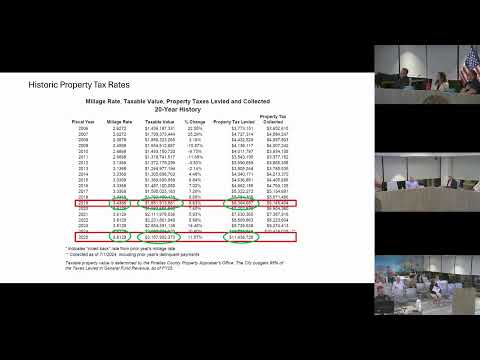
The commission on July 21 adopted a tentative millage rate of 3.8129 mills for fiscal year 2026–27, the same as the current year. CFO Victor Ortiz presented a high‑level schedule for budget adoption, explained that this submission may be lowered at subsequent hearings but not increased, and walked the commission through preliminary revenue and expense projections.
Ortiz said the city is projecting roughly $30 million in revenues in the base scenario and that the draft budget showed a potential one‑time use of about $1.9 million from reserves to balance projected expenses. He emphasized the presentation was conservative and that staff will bring detailed line‑item workshops in August before final hearings in September.
Commissioners split on the near‑term approach: some urged adopting the rollback rate to return money to taxpayers as a hedge against expected state property‑tax limits; others recommended holding the current rate to preserve flexibility in a year when the city still faces recovery and capital needs (pump station, seawalls, public safety building) related to recent storms.
The tentative millage must be advertised by July 28; the commission set workshops for August to review CIP and line items and scheduled statutorily required public hearings in September. "You can lower the millage later, not raise it," Ortiz reminded the commission.
Why it matters: adopting a tentative millage rate begins the statutorily required advertisement process and frames public hearings; the choice affects the scope of budget options and signaling to residents about property tax expectations.