Get Full Government Meeting Transcripts, Videos, & Alerts Forever!
Get email alerts on the Mobile Food Vendors topic
No spam. Unsubscribe anytime.
Planning Commission backs changes to mobile food-vendor rules, defines “temporary” as 5 days in 30
Summary
The Planning Commission voted to forward a resolution recommending city council adopt an ordinance amending Section 159.180 to allow ancillary mobile vending in Old Town with a 5-days-in-30 definition and a notification (rather than full permit) requirement; staff said map and text changes narrow locations and add enforcement measures.
The Planning Commission voted to adopt a resolution recommending that the City Council adopt an ordinance amending section 159.180 of the Auburn Municipal Code to allow ancillary mobile food vending in defined downtown areas, with limits and notice requirements.
Jonathan Wright, the city’s economic development director, reviewed edits since the June hearing: the vendor area map was revised to remove Brewery Lane and High Street and confine ancillary vending to Old Town proper; the draft now defines “temporary” as five days within a 30-day period, and it replaces a full permit in many cases with a notification requirement so staff can track time, place and manner and pursue enforcement if vendors operate outside the parameters.
“Five days is what the staff is proposing at this point,” Wright said, “anything more than that would require a use permit.” He added that the notification approach is intended to give the city awareness without overloading permitting capacity, while still allowing enforcement where necessary.
Commissioner Hobbs asked whether the duration language conflicted with an hours-of-operation provision; staff clarified they are separate: one limits the number of days a vendor may operate under the ancillary allowance, and the other governs on‑site operating hours. Commissioners also discussed parking constraints in Old Town and noted the ordinance may require future tweaks after implementation.
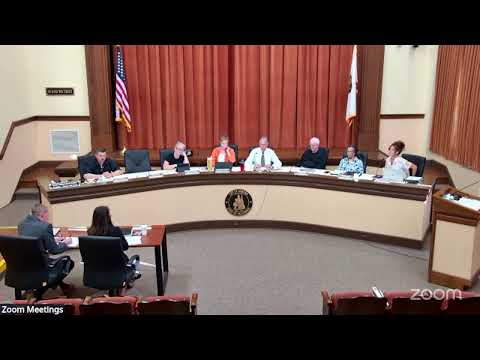
Chair Hyatt moved to send a resolution recommending adoption of the ordinance to the City Council; the motion carried by roll call among the planning commissioners present. The recommendation now moves to the legislative process at city council, where council may amend the ordinance as a legislative body.
The draft also includes provisions tying food trucks to health-code requirements (restroom/refuse obligations) and a notification step so staff can issue a written go-ahead and identify enforcement issues where trucks operate independently of a host business.
If council adopts the ordinance later, uses that exceed the ancillary allowances would still require a use permit and quasi-judicial review.