Get Full Government Meeting Transcripts, Videos, & Alerts Forever!
Get email alerts on the Subdivision Approval topic
No spam. Unsubscribe anytime.
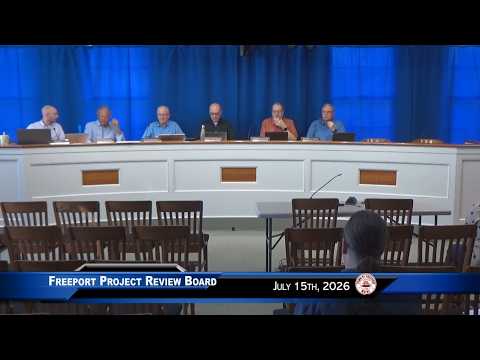
Freeport board approves 4‑lot Harpers Trail subdivision with stormwater, cistern and HOA conditions
Summary
The Freeport Project Review Board approved Jackson Built Inc.'s four‑lot open‑space subdivision on Harpers Trail, imposing conditions requiring a recorded stormwater maintenance agreement with yearly reporting, a performance guarantee and a recorded cistern easement giving town access for emergency use; the approval was by unanimous voice vote.
The Freeport Project Review Board voted to approve Jackson Built Incorporated's four‑lot open‑space subdivision on Harpers Trail, subject to conditions addressing stormwater, road work and fire‑safety access.
At the meeting the board approved printed findings and a set of conditions that require the applicant to record the final signed plan in the Cumberland County Registry of Deeds within 90 days, execute a maintenance agreement with the town for the subdivision's stormwater management system (with yearly reporting), post a performance guarantee to cover site work, and establish an inspection account for peer‑review fees. The approval also requires a recorded easement granting the town access to the fire cistern on Lot 4 and clarifies the homeowners association's responsibility for maintaining stormwater features.
Kyle (planning staff) told the board that the applicant revised its stormwater approach after peer review input, switching from an infiltration strategy to a detention design with shallow swales and ponds because seasonal high groundwater makes infiltration unreliable. "Staff is comfortable on the stormwater piece," Kyle said, but recommended making final peer‑reviewed adjustments a condition of approval.
Engineer Jason Vafiadis, representing the applicant, described the detention features and said the cistern easement and updated HOA documents would be recorded with the final plan. The conditions also require the fire cistern to be filled and tested before any certificate of occupancy is issued and direct the applicant to complete recommendations in a road assessment report before occupancy is granted.
The motion to approve was read into the record and passed by voice vote recorded as unanimous. The findings set a two‑year deadline to initiate construction, after which the plan becomes null and void unless an extension is requested and performance guarantees are continued.
The board did not record a numeric roll‑call tally in the transcript; the approval is documented in the meeting minutes and the board's motion lists detailed conditions the applicant must satisfy before occupancy or sale of lots.