Get Full Government Meeting Transcripts, Videos, & Alerts Forever!
Get email alerts on the Transit topic
No spam. Unsubscribe anytime.
Flathead County's Mountain Climber reports 48,069 Kalispell rides, eyes Tri‑City commuter service
Summary
Elizabeth Wood, director of Mountain Climber, told Kalispell council the system provided 60,979 rides last fiscal year (48,069 in Kalispell), described rider mix and voucher programs, and said a proposed Tri‑City commuter service would cost about $250,000 annually and require local match support.
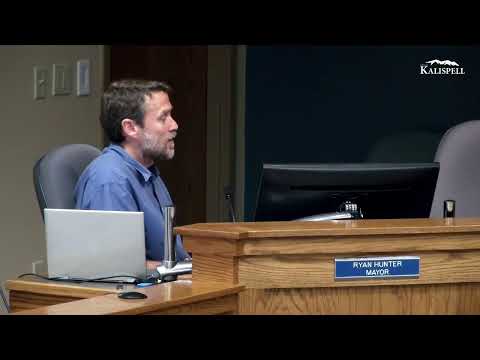
Elizabeth Wood, director of Flathead County Public Transportation's Mountain Climber, told the Kalispell City Council on July 20 that the service provided 60,979 rides in the July–June fiscal year, with 48,069 of those in Kalispell.
Wood said the program now operates as an on‑demand microtransit service; because each leg is counted as a ride, totals are not directly comparable to former fixed‑route figures. She gave a ridership breakdown of roughly 46% general riders, 28% people with disabilities and 26% seniors, and said passenger satisfaction averages about 4.9 stars out of 5.
Councilors asked about capacity and next steps. Wood said the system is nearing peak capacity during morning and late‑afternoon commuting windows and that a modest fare introduced in 2023 reduced demand as intended. Fare revenue currently totals about $40,000 annually; Wood explained federal grant rules mean fare dollars affect the local match rather than producing net revenue and that fare increases are being discussed to moderate trip frequency among a small number of frequent users and temporarily increase availability.
On longer‑term planning, Wood said Mountain Climber's top priority is a Tri‑City commuter connecting Kalispell, Whitefish and Columbia Falls. She estimated that adding commuter service on top of current operations would cost roughly $250,000 and require about four full‑time drivers; part of that staffing could also support on‑demand service in the cities. Wood said municipal contributions (Kalispell historically provides about $15,000 annually) and other local funds help meet the local‑match requirement for federal grants.
Wood addressed operational questions: the agency uses an app for bookings and single‑use voucher codes for clients who cannot pay electronically; the fleet is shifting toward smaller Ford Transit microtransit vehicles; some larger bus maintenance remains costly; and electric vehicles currently pose operational challenges for rural shift lengths and charging logistics.
Wood said detailed cost projections for a commuter service exist but were not presented in full that evening; she offered to return with a breakdown and noted staff and the transportation advisory committee are continuing to examine options.
The council thanked Wood and encouraged further coordination between the Mountain Climber and city planning as Kalispell grows.