Get Full Government Meeting Transcripts, Videos, & Alerts Forever!
Get email alerts on the Town Meeting Reform topic
No spam. Unsubscribe anytime.
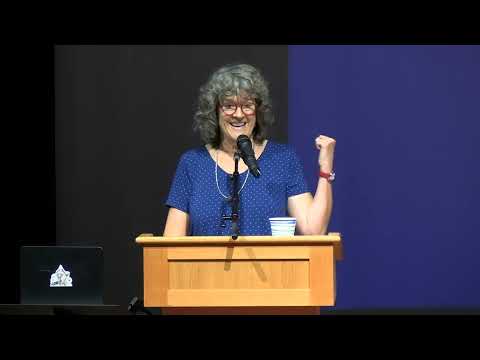
Facilitator Susan Clark outlines town-meeting reform options at Highland Center forum
Summary
At a community forum in Hardwick, facilitator Susan Clark reviewed trade-offs among floor meetings, Australian-ballot voting and hybrid "third-way" models, and urged towns to pursue practical accessibility fixes such as childcare, volunteer democracy committees and clearer candidate information. Residents raised concerns about social media misinformation and candidate recruitment under ballot systems.
At a community forum at the Highland Center in Hardwick, facilitator and Middlesex town moderator Susan Clark laid out options for towns weighing whether to keep traditional floor town meetings, move to Australian-ballot voting, or try hybrid "third-way" approaches that combine deliberation and broader ballot access.
Paul Fix, editor of the Hardwick Gazette, opened the event and said the Gazette and the Highland Center cosponsored the evening and would share the meeting recording and flip-chart notes. "Welcome to the Highland Center," he told attendees.
Clark told the audience she would summarize research and practical examples and then invite reflection. "I'm really honored to do anything I can for you in this key moment," she said, before describing political-science findings showing how attendance and participation at town meetings can change depending on format and local issues.
Why it matters: Clark framed the choice as a trade-off between democratic quality — the deliberation, amendment and accountability available at an in-person floor meeting — and democratic quantity — the higher turnout and absentee voting that Australian-ballot systems typically produce. She cited Frank Bryan's long-running town-meeting research and said votes cast under Australian ballot often outnumber meeting attendance by two or threefold, though local mileage varies.
Models explained: Clark described three practical approaches: - Preserve a floor town meeting but adopt improvements ("sparkles") such as childcare, better sound systems, youth engagement and volunteer democracy committees that help publicize issues and reduce barriers; - Hybrid arrangements that elect officers by ballot while retaining floor votes for budgets and public issues (a model Clark said both Hardwick and Greensboro already use in part); and - Two- or three-part systems modeled on other states (for example, New Hampshire's SB2 or Brattleboro's charter work) that pair a deliberative session with a later ballot vote to codify decisions.
Clark also discussed representative town meeting, where voters elect delegates to a later deliberative session; she noted Vermont law requires a charter for that option and said it is used successfully elsewhere.
Practical fixes: Clark emphasized that many accessibility and engagement steps can be adopted regardless of structural choice. She recommended volunteer "democracy committees," premeeting informational materials (candidate webpages or simple summaries), childcare or stipends for caregivers, improved audio and livestreaming, and tools such as on-site private voting clickers to speed and privatize floor votes.
Voices from the audience: Residents asked detailed questions and raised concerns. Ross Connolly (Hardwick) framed floor meetings as a "privilege of self-governance." Ellen from Greensboro warned about social-media misinformation around ballot votes: "It's a venue for misinformation," she said, urging proactive town communication. Ellen Selnick described a local experience in which an Australian-ballot year produced fewer new candidates than the prior floor-meeting year: "...last year, it was by Australian ballot, and there were no new peep — I mean, nobody wanted to be a candidate." Clark advised towns to plan outreach and candidate information efforts to counter that effect.
Remote participation: Clark said remote voting and hybrid participation raise voter-identification and statutory questions for binding town-legislative meetings. She pointed to Massachusetts protocols that allow remote accommodations under ADA and predicted the Vermont legislature may clarify rules to expand options for remote participation.
Next steps and follow-up: Organizers said HCTV recorded the forum for rebroadcast and that flip-chart notes and other resources will be posted. Clark encouraged towns to test incremental improvements and gather local data before making structural changes.
The forum moved into a longer audience Q&A; organizers asked attendees to leave photos of flip charts or scan and send them for compilation. The session closed with plans to circulate recordings and summaries.