Get Full Government Meeting Transcripts, Videos, & Alerts Forever!
Get email alerts on the Voting Methods topic
No spam. Unsubscribe anytime.
Hardwick creates task force to study Australian ballot for town votes after public debate on turnout
Summary
After extended public comment showing large turnout differences between town-floor votes and Australian-ballot votes, the Hardwick Select Board agreed to form a task force to evaluate whether and how to move some questions to Australian ballot. The board will solicit volunteers and review applications at its June 18 meeting.
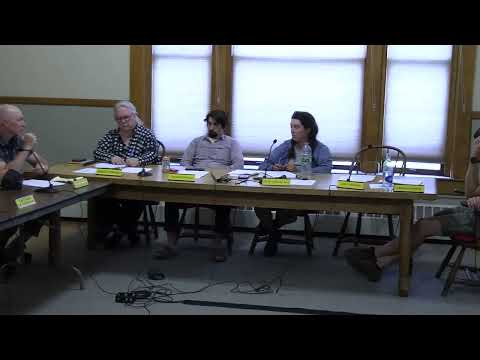
The Hardwick Select Board voted on June 4 to form a task force to evaluate whether to hold future votes by Australian ballot rather than by traditional town‑meeting floor votes. The decision follows extensive public comment and data presented to the board comparing turnout at town meeting with vote counts for Australian‑ballot items.
A resident who identified themself as a community data‑watcher told the board that school‑budget Australian‑ballot returns drew hundreds more votes than the town budget floor vote, citing Secretary of State turnout figures. The resident argued the discrepancy shows Australian ballot produces broader participation: “More people should have the opportunity to vote,” the commenter said.
Board members and residents debated the tradeoffs. Some speakers defended town meeting as a place for deliberation; others said the in‑person format and procedural rules can intimidate or exclude residents and suppress turnout. The board discussed statutory constraints — some items are required by law to be Australian ballot — and noted that charter and statute questions will need legal review.
The board agreed the task force should be nimble (the group will be a task force, not a standing committee, so it can operate with simpler meeting rules) and include at least two Select Board designees and a mix of community members. The town manager’s office will post a notice soliciting letters of interest; the board plans to review candidate letters at its June 18 meeting and decide on membership.
Select Board members said the task force’s work should include public education on meeting procedures (for example, the effect of motions and 'calling the question'), clarification of which items can legally be moved to Australian ballot, options for hybrid/informational meetings, and outreach strategies to improve voter awareness and participation. The board emphasized no immediate change is being made; the task force will present options for the community to consider.
The Select Board asked that the task force include members familiar with the statutes and charter that govern warnings and ballot procedures so the group can identify legally permissible options and timelines for any changes.