Get Full Government Meeting Transcripts, Videos, & Alerts Forever!
Get email alerts on the Jackson Dam topic
No spam. Unsubscribe anytime.
Hardwick board approves Jackson Dam design study, authorizes steering committee
Summary
The Hardwick Select Board approved a scope of work and cost‑estimate process and authorized a steering committee to guide study of Jackson Dam. The board emphasized the study is for information-gathering, not a final decision, and Emily (partner) said funders see this as a phased multi‑year effort.
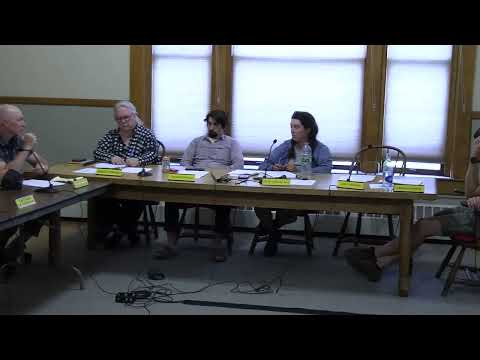
The Hardwick Select Board on June 4 approved a scope of work and cost‑estimate process to begin design and technical study of Jackson Dam and authorized formation of a steering committee to guide public engagement and evaluation.
The motion to approve the design scope and cost estimate passed by voice vote after board members said the work is intended to gather facts and community input rather than to decide the dam’s ultimate fate. Chair said the board’s intent was clear: “This letter should not be interpreted as a final decision regarding the future of Jackson Dam or endorsement of a specific final decision or project outcome. Rather, it reflects the select board support of continued information gathering, coordination, technical evaluation, and exploration of potential future pathways related to the site.”
Emily, the consultant who returned to present a more detailed plan after an earlier technical briefing, outlined three written items she and staff drafted: a description of the conservation district’s role, a suggested letter the select board could endorse to funders, and an RFP outline to start 30% design work. She said the materials were intended to demonstrate Hardwick “is ready for a 30% design process” and to help secure outside funding; she added funders have told her they expect more fact-finding before any final decisions.
Emily described a multi‑phase approach: roughly a year of technical study and community engagement, potential seasonal drawdowns to assess structural condition and sediment, and then longer‑term planning for any remediation or removal work. She cited an SLR planning estimate of about $200,000 as a target for initial design and study costs but said that number was an order‑of‑magnitude planning figure rather than a finalized budget. Emily emphasized that sediment management, permitting and the costs of any dredging or sediment removal are “intricately bound up” with any pathway the town considers.
Board members gave Emily latitude to organize a steering committee and return with a proposed structure and appointment plan. The board recorded its approval and asked staff to place a steering‑committee item on the next agenda to formalize membership and responsibilities.
Next steps include drafting and posting an RFP for design services, additional technical field work to assess sediment and structure, and community engagement through the proposed steering committee. The motion noted no town funds were requested at this time and that Emily’s organization would pursue external funders to support the next phase.