Get Full Government Meeting Transcripts, Videos, & Alerts Forever!
Get email alerts on the Community Engagement topic
No spam. Unsubscribe anytime.
Westford Select Board liaison Tom Clay outlines engagement push to broaden budget input
Summary
Tom Clay, Select Board liaison to the DEI Committee, described a Select Board-led engagement initiative after recent listening sessions (including with the Indian American community) to reach residents who do not regularly participate in budgeting and town meeting; ideas include a citizen communication committee, recreation-based outreach, and using trusted neighborhood networks.
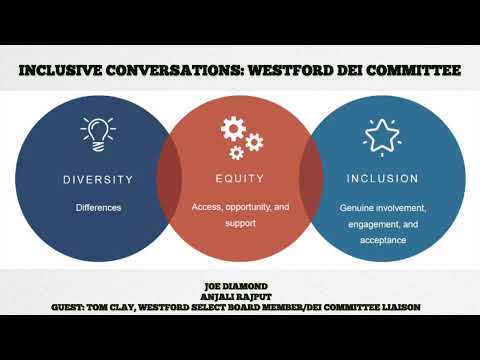
Tom Clay, immediate past chair of Westford’s Select Board and the board’s liaison to the town’s DEI Committee, described a new outreach plan intended to bring residents who do not normally attend town meetings into budget and planning conversations.
Clay told the DEI Committee’s “Inclusive Conversations” podcast that the Select Board launched the initiative because budget pressures from Proposition 2½ and rising inflation are forcing “very difficult choices” about how to allocate limited local resources, and the board wants broader input before recommending budgets to town meeting. “We would like to find a way to reach out to groups that have not been traditionally involved in municipal planning,” Clay said.
Why it matters: Clay said the town’s real-dollar purchasing power has been squeezed under the constraints of Proposition 2½, so decisions about trade-offs between education, public safety and other services should reflect a wider set of resident priorities. He pointed to prior work by a cross‑jurisdiction budget task force whose recommendations and competitive bidding produced significant savings—“we were able to borrow a bunch of good ideas and save almost $1,000,000 a year,” Clay said—to illustrate how outreach can inform practical budget choices.
What’s proposed: Clay described a phased listening-session approach already underway. The Select Board began with two target groups: leaders in the Indian American community and parents of school‑aged children. From an initial session with the Indian American community Clay said several practical proposals emerged, including creating a citizen communication committee to identify priority themes and distribute short, targeted messages through trusted networks.
Clay and the hosts discussed using recreation programming as an engagement entry point—adding or marketing sports such as cricket and badminton, and making facility rental easier for outside leagues. Clay noted that some current field rentals only offset about half the maintenance cost, and expanding offerings could both strengthen community ties and generate revenue to support services.
Outreach strategy and timing: Clay emphasized outreach through channels residents already use—neighborhood chat groups and affinity networks—rather than relying on the town website. He described the next step as consolidating learnings from the parents’ listening session, requesting a future Select Board agenda slot to report back, and asking staff for any resources needed to act. Clay suggested twice‑yearly check‑ins as a possible cadence for continuing the effort.
Voices from the episode: DEI Committee cochairs Joe Diamond and Anjali Rajput (both hosts of the podcast) praised the listening-session format and highlighted the potential for the committee to help connect the Select Board with communities that have been lightly engaged. “It was a great model,” Diamond said of the session that brought out “pent up ideas” from residents.
What’s next: The engagement initiative will expand in stages as the working group organizes additional listening sessions and shares findings with the Select Board. Clay said success need not be measured solely by turnout numbers; qualitative gains—better insights from community leaders and more diverse input into budget trade-offs—also count. The DEI Committee and Select Board plan further listening sessions and follow-up reporting to the board.