Get Full Government Meeting Transcripts, Videos, & Alerts Forever!
Get email alerts on the Development Code Update topic
No spam. Unsubscribe anytime.
Staff: Hood River development‑code consolidation behind schedule as state housing rules shift
Summary
City planning staff told the council the multi‑module development code consolidation is behind schedule and will need extra work to align with recent state housing law and rule changes; staff proposed additional work sessions and a consolidated draft this summer with adoption planned in the fall.
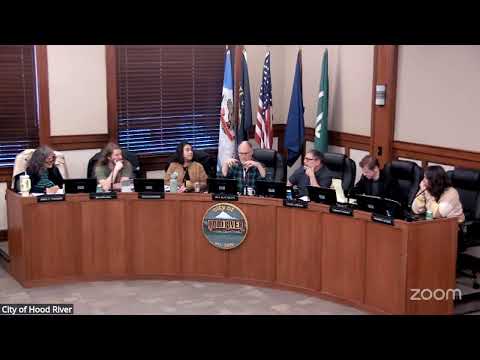
City planning staff Kevin and Dustin briefed the council on the status of a comprehensive development‑code consolidation the evening of June 8, saying work has taken longer than anticipated because of new state housing guidance and rulemaking.
Kevin said the project began with a phase‑1 code audit funded by the Department of Land Conservation and Development (DLCD) and that staff intend to complete a consolidated draft this summer, followed by a code adoption process in the fall that would include the planning commission and council work sessions. "Bottom line, we're still working on it, but we're clearly behind schedule," Kevin said, adding the city will likely need a contract amendment to add planning‑commission and council work sessions.
Dustin warned the council that 2024–25 state changes (including the Housing Accountability and Production Office, HAPO, guidance and a July 1 law changing appeal standing) are shifting how local code must be written; he described the coming changes as "a major sea change" for local land‑use process and noted that some statutes will preempt local rules on housing approvals and appeals. "Some of these new updates at the state level haven't been thought out really in terms of context of a larger code set," Dustin said, and staff are working to reconcile state requirements with local objectives so the adopted code will not be immediately inconsistent with state law.
Why it matters: the consolidated code will govern housing and land‑use permissions across the city; state preemption and procedural changes could alter who has standing to appeal land‑use decisions and how quickly projects proceed, which in turn affects time‑sensitive affordable‑housing funding and local planning objectives.
Staff outlined next steps including additional workshops (an anticipated 8–10 council appearances and several planning commission sessions), coordination with HAPO and other state offices, public engagement that may be expanded beyond the original scope, and a consolidated draft for council review this summer. Councilors asked about deadlines, the possibility of extending the adoption timeline and opportunities to increase public engagement; staff said some deadlines are driven by contract and state processes but that scope adjustments are possible with the consultant.
Next steps: staff will return with a consolidated draft for summer review, propose additional work sessions and continue to coordinate with the consulting team and state partners to ensure compliance with evolving state requirements.