Get Full Government Meeting Transcripts, Videos, & Alerts Forever!
Get email alerts on the Utility Rates topic
No spam. Unsubscribe anytime.
Hood River council adopts one‑year utility rate schedule, cuts residential water allowance to 3,000 gallons
Summary
The city council approved Resolution 2026‑10 adopting a one‑year water, sewer and stormwater rate schedule for fiscal 2026–27. The package raises stormwater rates, keeps sewer structure intact with inflation adjustments, and reduces the residential water usage allowance from 5,000 to 3,000 gallons per month to encourage conservation.
The Hood River City Council voted to adopt a one‑year utility rate schedule for fiscal 2026–27, approving changes staff said are needed to meet operating and capital requirements while encouraging water conservation.
Staff presented the package as a stopgap while the city commissions a consolidated long‑term rate study. The proposal raises the stormwater charge from $11.03 to $13.24 per equivalent dwelling unit and recommends inflationary increases for base and commodity charges tied to a water/wastewater CPI. For water customers, staff recommended reducing the residential usage allowance from 5,000 to 3,000 gallons per month; staff said roughly half of residential customers use 3,000 gallons or less in a year, and an allowance reduction acts as a conservation incentive.
"We are recommending reducing the allowance from 5,000 gallons a month to 3,000 gallons a month," staff said, noting the change is intended to encourage conservation and reflect typical household use. The memorandum attached to the council packet estimated the average monthly residential water bill would rise from $47.29 to $54.45; the average sewer bill was estimated to move from $67.68 to $70.50 per month.
Councilors discussed affordability and the policy tradeoffs involved in raising rates during a period of high costs. "While it's a difficult time to raise costs, it's a reality of our environment — things cost more and we need revenue to maintain service levels," one councilor said during deliberations.
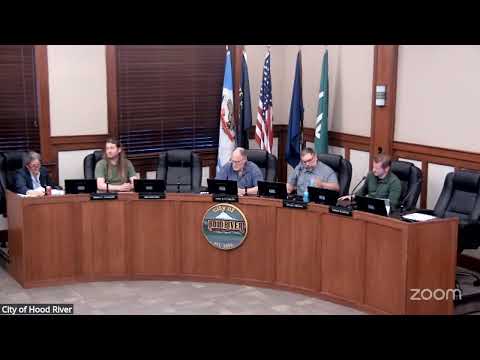
After public testimony (none was offered during the hearing) and a short deliberation, Councilor Paulson moved adoption of Resolution 2026‑10; the motion was seconded and carried by voice vote. Staff will incorporate the new schedule into the FY 2026–27 budget and prepare materials for a consolidated long‑term rate study to take effect in subsequent years.
What happens next: the one‑year schedule takes effect for fiscal 2026–27; staff recommended pursuing grants and other funding mechanisms in parallel and developing an ongoing maintenance funding plan for stormwater and other capital needs.