Get Full Government Meeting Transcripts, Videos, & Alerts Forever!
Get email alerts on the Land Use Variance topic
No spam. Unsubscribe anytime.
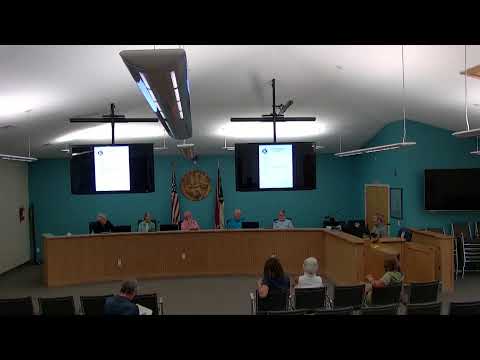
Southern Shores planning board denies variance request for shed at 132 Oysterbed Lane
Summary
The Southern Shores Planning Board, acting as the Board of Adjustment, unanimously denied a variance for a partially constructed shed at 132 Oysterbed Lane after finding the applicant did not meet state statutory criteria; staff said a stop‑work order and an as‑built survey showed setback violations.
The Southern Shores Planning Board, sitting as the Board of Adjustment, voted unanimously to deny a variance request that would have allowed a partially built shed to remain at 132 Oysterbed Lane.
The applicant, Jeffrey Gerdes, who said he was representing his wife Janine (the applicant on the written application), told the board he built what he believed would be a 12‑by‑12 shed without realizing a separate zoning variance was required. "It wasn't purposely done. It wasn't maliciously done," Gerdes said, adding the structure is about "80% done" and that moving it would require cutting mature oaks or otherwise create practical problems.
Town planning staff, represented at the hearing by Wes Haskett, presented a staff report stating the town posted a stop‑work order on or around May 12, 2026, and that an as‑built survey shows the shed sits roughly 8.4 feet from the southern property line (side setback) and 5.3 feet from the eastern property line (rear setback). Staff told the board that alternate locations on the lot could accommodate a similar‑sized shed in compliance with setback rules and that no permits had been obtained before construction began.
Under state law (N.C. Gen. Stat. §160D‑705(d)), a zoning variance may be granted only if an applicant meets four statutory criteria: (1) strict application of the ordinance would cause unnecessary hardship; (2) the hardship results from conditions peculiar to the property; (3) the hardship was not caused by the applicant; and (4) the variance is consistent with the spirit, purpose and intent of the ordinance. The board took a recorded vote on each of the four criteria.
Board members voted that the applicant did not meet criteria 1, 2 or 4. Criterion 3 — whether the hardship resulted from actions taken by the applicant — carried in favor of the applicant (5–0), but because all four criteria must be satisfied under state statute, the chair said the only option was to deny the variance. A motion to deny was approved by a unanimous 5–0 vote.
During discussion, several board members said they were sympathetic to the applicant's situation but emphasized that allowing the variance would set a precedent and that the town's setback rules protect neighborhood character and natural features.
The chair read the board's appeal rights following the vote: the decision may be appealed to Superior Court within 30 days from the decision's effective date.
Background and next steps: Planning staff said the town's stop‑work order remains in effect and that the applicant may pursue an appeal or revise the proposed location and return with a new application. The board also directed staff to continue routine follow‑ups noted in the staff report. The meeting included unrelated public comment on sidewalk access on Duck Road and announcements about wastewater plant monitoring; the board adjourned after staff briefings.