Get Full Government Meeting Transcripts, Videos, & Alerts Forever!
Get email alerts on the Remote Meeting Policy topic
No spam. Unsubscribe anytime.
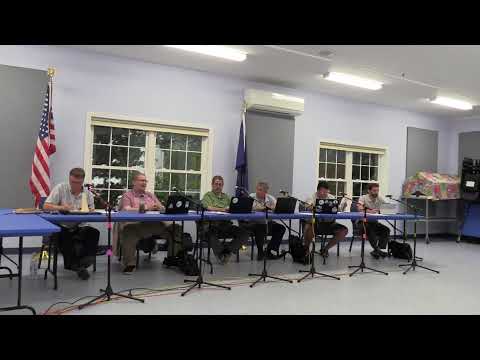
Select Board reviews draft remote-meeting policy and asks staff to gather model rules
Summary
At a workshop session, the board discussed whether a proposed remote-meeting policy should apply to all town boards and committees, raised concerns about ambiguous wording and chair authority, and directed staff to collect model policies and implementation guidance.
The Select Board held a workshop on a proposed remote-meeting policy that focused on scope, clarity and practical implementation.
Staff member (S1) framed the central question as whether the policy should apply only to the select board or to all town boards and committees, saying, “The biggest decision the board needs to focus on is, is this remote media policy focus gonna be solely for the slack board or is it for all boards and committees?” S1 also cautioned that the current draft delegates substantial authority to committee chairs and suggested the board set clearer boundaries.
Chair (S3) and other members found multiple drafting errors and unclear wording. “This document has so many words that are wrong,” S3 said, urging proofreading and revision before adoption. Members flagged specific concerns: inconsistent definitions (for example, how the policy defines “attending by remote”), the degree of discretion given to chairs, whether 24-hour notice is sufficient, and who will provide technical support during hybrid meetings.
Sam Brown (S6), who identified themself during public comment as a Pine Hill resident and Safe Streets Committee member, urged the board to start with one board for training and rollout: “Let’s get 1 board trained, organized, and a policy written so we can see what’s going well and what’s going on,” Brown said.
Speakers emphasized operational and equity issues: committees must have reliable audio/video equipment, chairs need training to manage remote inputs, and staff capacity for setup cannot be assumed. Several members recommended that staff collect model policies from regional organizations and sample language from the Maine Municipal Association or neighboring towns before returning a revised draft.
The board directed town staff to gather model remote-meeting policies, consult with other town managers about what works, and present recommended language and implementation priorities at a future meeting.