Get Full Government Meeting Transcripts, Videos, & Alerts Forever!
Get email alerts on the Permits topic
No spam. Unsubscribe anytime.
Mesilla planning commission debates when a one-year permit period begins and limits of administrative approvals
Summary
At a May 18 work session the Planning, Zoning and Historical Appropriateness Commission discussed how the town interprets permit timing, administrative approvals (including a $10,000 threshold in historic zones) and whether special uses must go to the Board of Trustees.
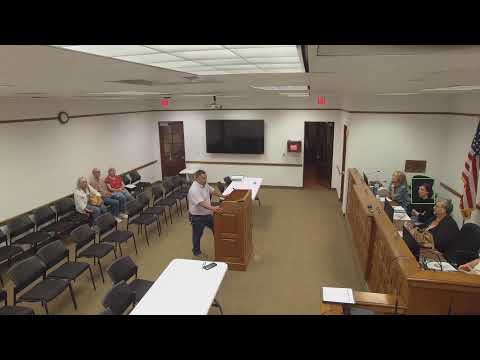
MESILLA — At a May 18 work session, town staff and commissioners spent the bulk of the meeting parsing how Mesilla’s code treats permits, including when a one-year permit term should begin and which projects can be approved administratively.
“My name is Eddie Salazar. I’m with the community and economic development department,” staff said, introducing the session’s purpose as “to discuss interpretation and discrepancies with our town code.” Salazar told the commission that, under current practice, permits are “issued for a year” and that the town’s computer records the issuance date when an applicant physically picks up the permit: “whenever they come here and they pick up the permit, our computer drops the date that it was issued.”
Commissioners pressed whether the one-year term should instead begin when plans are complete or when approval is granted administratively. Staff said some approvals are handled administratively while others require Planning & Zoning (PSAC) review; PSAC can forward recommendations to the Board of Trustees where the code calls for final action.
The group agreed that certain work can be handled as administrative approvals, with staff noting a $10,000 limit for renovations in the historic zone and in the commercial renewal zone. Commissioners raised common edge cases — carports, storage sheds, tennis courts and swimming pools — and asked staff to return with clarified language for setbacks and definitions of “structure.” One commissioner noted the pool setback typically cited was 5 feet.
The commission also discussed permit expirations and extensions. Commissioners and staff described phased projects as one way to keep large projects moving while limiting upfront costs, and discussed six-month extensions when projects are still active but not complete. Staff said violations (for example, excessive weeds or inoperable vehicles) factor into enforcement decisions.
On code procedure, members noted apparent disparities between written code and current practice for special-use applications and variances. The transcript cites a code section that says the Board of Trustees should “prescribe the form in which application shall be made,” prompting a request for clearer process language so applicants and staff know whether and when an item must go before trustees.
Votes at a glance The commission approved the meeting agenda by voice vote and later accepted the consent agenda (05/04/2026 minutes) after flagging and agreeing to correct attendance and transcription errors in the minutes. The meeting record does not show a roll-call tally by name; the motions were adopted by voice vote.
Why it matters How the town defines when a permit clock starts affects property owners’ timelines, enforcement windows and project phasing. Clearer guidance on administrative approval thresholds, setbacks and the special-use sequence would reduce uncertainty for builders and residents.
What’s next Staff said it will draft clarified language and return to the commission; commissioners indicated they will place clarified code language on a future hearing agenda for formal consideration.