Get Full Government Meeting Transcripts, Videos, & Alerts Forever!
Get email alerts on the Harbor Station North topic
No spam. Unsubscribe anytime.
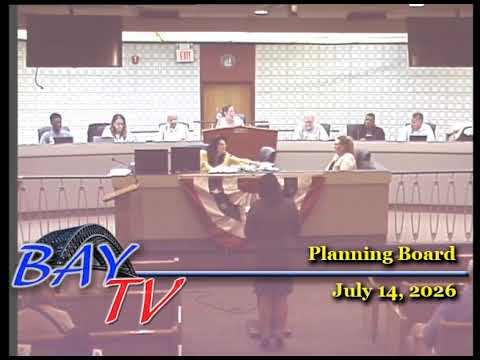
Bayonne planning board backs commercial-recreation amendment, urges removal of industrial fallback
Summary
The Planning Board recommended that City Council adopt an amendment allowing "commercial recreation" on a ~10.2-acre Harbor Station North parcel and voted to recommend removing industrial/flex-space as a conditional fallback. Residents raised traffic, wildlife and emergency-response concerns; planners said site-plan review will address those issues.
The City of Bayonne Planning Board voted to recommend that City Council adopt an amendment to the Harbor Station North redevelopment plan that would allow commercial recreation — such as batting cages, multi‑tier golf ranges, bowling alleys and small amusement or entertainment venues — on an approximately 10.2‑acre parcel on the peninsula.
The board also approved a companion recommendation asking Council to remove an industrial/flex‑space fallback from the plan. The motion, offered by a commissioner and seconded on the record, passed with recorded "Aye" votes from the members present.
Why it matters: the amendment changes the set of uses the city will permit on an awkward, triangular parcel north of Bay 151. Proponents said commercial recreation would provide new leisure and regional‑draw options without preventing multifamily residential on other parcels; opponents warned it could increase traffic, strain emergency services and harm wildlife habitat that the New Jersey Department of Environmental Protection (DEP) has deed‑restricted in portions of the peninsula.
Planning consultant Andy Slough, who presented the amendment, said the goal is to open options for recreation on a parcel that "is about 10.2 acres" and is not well suited to efficient multifamily development. "You could have an amusement park there; you could have sports — batting cages, a golf range or miniature golf — essentially commercial recreation of all kinds," Slough said, describing the plan's permitted uses and the conditional fallback of flex space that would only apply if a redevelopment agreement authorized it.
Residents and neighbors urged caution. Patricia Hilliard, a nearby resident, asked whether parts of the parcel were deed‑restricted for wildlife; the board confirmed a portion is under a DEP restriction intended to remain natural. Mike Resigno, another resident, said the area "is residential now" and urged the board not to convert it to commercial uses that could disrupt wildlife and neighborhood character. "This area should be left … residential," Resigno said.
Board members probed technical issues including signage (the draft cites pylon or monument signs up to about 50 feet), parking formulas tied to specific uses, flood‑elevation requirements and stormwater compliance under DEP rules, and emergency‑vehicle preemption on traffic signals. Slough and city staff said those matters would be addressed in greater detail at site‑plan review for any future development and that conditional uses would require a redevelopment agreement and separate city‑council approval.
Several commissioners recommended an amendment to the board's recommendation to remove industrial/flex‑space as a conditional fallback. Supporters of that change said it would keep the amendment focused on recreation and leave purely industrial activity out of the redevelopment plan for that parcel. After discussion and public statements for and against the change, the board voted to forward the amended recommendation to City Council.
Next steps: The planning board’s recommendation will be sent to the City Council for its consideration. Any actual projects under the new rules would still require site‑plan review, parking and traffic studies, stormwater approvals and, where applicable, separate redevelopment agreements and council approvals.