Get Full Government Meeting Transcripts, Videos, & Alerts Forever!
Get email alerts on the Urban Growth Boundary topic
No spam. Unsubscribe anytime.
Estacada leaders debate urban growth, zoning and a joint workshop to shape long-range plans
Summary
Commissioners and a council member clashed over whether expanding the urban growth boundary is the right path for Estacada, and the group agreed to pursue a near-term joint workshop and a parallel track of shorter-term zoning updates and community engagement.
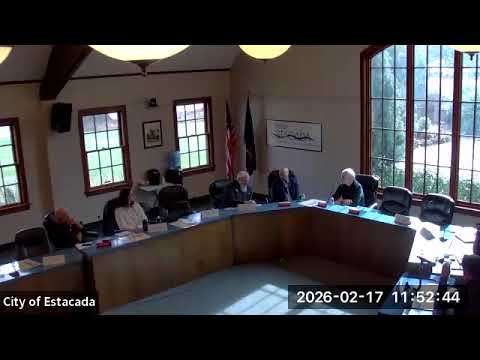
Commissioners, staff and a city council member spent the bulk of the Estacada Economic Development Commission’s February meeting debating the city’s long-range growth strategy, the urban growth boundary (UGB) and how to align the comprehensive plan with local zoning and development code updates.
The Chair opened the discussion by urging coordination: "I would probably recommend an additional joint meeting sooner than later to have more of the conversations you were suggesting about the where and the how," the Chair said, asking the council to participate as listeners and mild participants in the process. A city council member who attended warned that expanding the UGB would bring development pressure and put the community’s rural identity at risk. "We also can't lose the community's identity in this, and the biggest thing is rural," the council member said.
Speakers described competing priorities: commissioners and planning-aligned members pressed for studying specific corridors (including the Eagle Creek area) and updating the development code to identify buildable land and wetlands; other members stressed the need to protect community character and guard against rapid, unmanaged growth. The council member summarized the political and community tensions: "If we remove our thoughts and our emotions and just look at this strategically from a business perspective... the race to Eagle Creek is on." Several commissioners agreed on the need for a parallel approach: pursue long-range comprehensive-plan updates while running a shorter-term track to change 4–5 priority zones and engage business and community volunteers to show progress.
Practical next steps recorded in the meeting included asking staff to share an existing RFP and contract with the University of Oregon (which staff said is already contracted to do some work), inviting the local Chamber of Commerce to present an update to the commission, and scheduling a joint workshop with city council. The Chair volunteered to brief council in the near term and suggested forming a small subcommittee to participate in joint planning sessions.
No formal policy decisions (such as a UGB expansion) were made at the meeting; the conversation concluded with direction to pursue a joint workshop and short-term zoning work while continuing community engagement.