Get Full Government Meeting Transcripts, Videos, & Alerts Forever!
Get email alerts on the Window Replacement topic
No spam. Unsubscribe anytime.
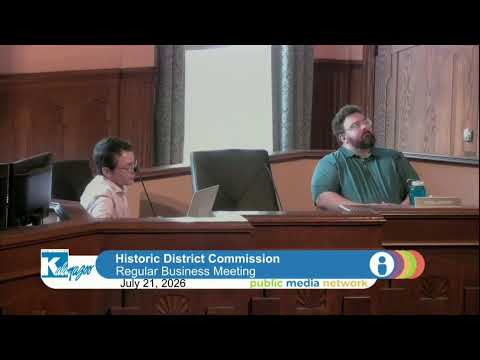
Commission declines proposed window replacements at 1002 West North Street; seeks more restoration-focused approach
Summary
After hearing from owner Hannah Slade and contractor Kevin Austin, the commission declined the proposed mix of repairs and new composite/fiberglass windows for a long-vacant, fire-damaged duplex at 1002 West North Street, citing concerns about divided lights and urging preservation-minded repair where feasible.
The Kalamazoo Historic Preservation Commission declined to approve the proposed window work at 1002 West North Street after extended discussion about repair versus replacement and the visual effect of faux muntins.
Owner Hannah Slade and contractor Kevin Austin described a plan to repair salvageable windows and replace severely damaged openings with composite or fiberglass windows (options discussed included Fibrex and Pella fiberglass). Slade said the house has been vacant about six years and suffered some fire damage; the applicants said they planned to keep removed historic materials on site in case future restoration is desired.
Commissioners urged preservation-first approaches where feasible, noted that true divided-light (individual panes) windows look different from single-pane units with applied or internal grids, and recommended that applicants explore historically sympathetic options (true divided lights, aluminum-clad wood, or salvaged elements). The commission discussed that faux muntins often reveal themselves in reflective differences and that some large openings might historically have been paired double-hung windows rather than single picture windows.
A motion to approve a certificate of appropriateness citing Standards 2, 6, 9 and 10 failed on a roll call. Staff said they would follow up with the applicants and encouraged them to provide more documentation about which windows are salvageable, whether true divided-light options are available for the needed sizes, and what repair options (including epoxy restoration) might achieve preservation goals.
Because the commission did not approve the application, the applicants may revise their proposal and return with additional evidence to support wholesale replacements or a more repair-focused plan.