Get Full Government Meeting Transcripts, Videos, & Alerts Forever!
Get email alerts on the Recovery Housing topic
No spam. Unsubscribe anytime.
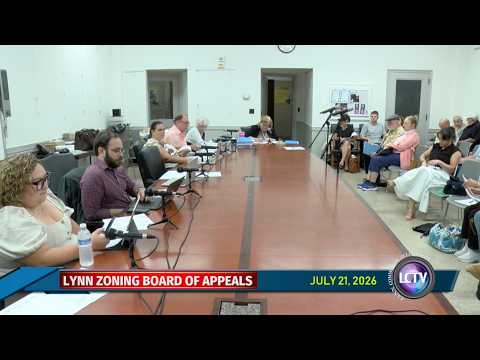
Neighbors press ZBA over Grace House plan; board continues 28 Linwood case for more plans and limits
Summary
The Lynn Zoning Board continued consideration of Grace House LLC’s request to convert 28 Linwood Road into a 34‑bed recovery residence after hours of testimony from the applicant, its counsel and dozens of neighbors. The board asked for a revised landscaping plan, certified parking data and impervious‑area calculations before re‑hearing on Aug. 4.
The Lynn Zoning Board of Appeals continued a disputed proposal to convert 28 Linwood Road into a recovery residence after the applicant presented a revised parking and occupancy plan and neighbors urged the board to require additional safeguards.
Stephanie Keefer of Smolik & Vaughn, representing Grace House LLC, told the board the updated plan provides seven on‑site parking spaces and removes tandem stalls. Keefer said the applicant had reduced its requested maximum occupancy from 40 to 34 and would limit the number of residents allowed to bring vehicles to six. "We are proposing to limit the number of individuals that may have a vehicle to 6 individuals," Keefer said.
Attorney Frank Vitale, representing the petitioner in related matters, read guidance from the state Attorney General and cited the Federal Fair Housing Act, saying municipalities must take care not to apply neutral land‑use rules in a way that has discriminatory effects. "The Fair Housing Act ... makes it unlawful to make unavailable or deny housing based on a protected characteristic," Vitale said, urging the board to evaluate the accommodation request under federal protections.
Neighbors and local officials pushed back. Ward 6 Lynn City Councilor (identified in the record by role) said "34 beds in this neighborhood is... unacceptable" and urged denial or a substantially smaller limit. Residents who live near the site raised concerns about parking overflow, traffic near a nearby school, increased impervious surface and the operational details of the proposed sober‑home operation.
Speakers from the public read several written opposition statements into the record, including a detailed memorandum arguing the applicant had not met the burden of proof and raising safety, parking, staffing and eviction‑protocol concerns. One letter emphasized that review must focus on site‑specific evidence rather than comparisons to other properties.
Operator Taylor Lenhoff said the house uses extensive background checks and has written membership and emergency/relapse procedures, and she said those documents had been submitted with the application. "We do have an emergency relapse procedure in our membership agreement," Lenhoff said, adding that emergency contacts and transportation protocols are part of the paperwork the operator provided.
Board members said the materials presented so far were insufficient for a final ruling. They asked the applicant to produce: a full landscaping plan showing proposed screening and repaired fencing along Amory/Armory Street; certified parking measurements and a revised parking layout that addresses the front parking space noted on the plan; precise existing and proposed impervious/pervious calculations for the lot; and a clear list of operational procedures (staffing levels, monitoring and relocation/transport protocols) noted in writing. The board also asked that any neighborhood stipulations agreed with the applicant be provided for review.
After discussion the board voted to continue the case to the board’s August 4 meeting so members could review the requested documents. The continuance was approved by a roll‑call voice vote; the board asked that the applicant submit full-size plans and documentation in time for administrative review.
What happens next: The board will reopen the hearing on Aug. 4 with the expectation that the applicant will provide the landscaping and impervious‑area calculations, a certified parking plan, a documented eviction/relapse protocol and specified screening/fence improvements. The continued hearing will allow the board to decide whether the requested reasonable accommodation and any special permits can be granted with conditions.