Get Full Government Meeting Transcripts, Videos, & Alerts Forever!
Get email alerts on the Economic Development topic
No spam. Unsubscribe anytime.
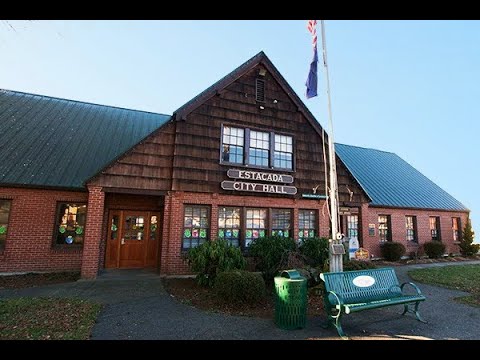
Consultants tell Estacada council a hotel is feasible but will need public-private gap financing
Summary
A hotel feasibility study presented at the Estacada council retreat found unmet overnight demand and two viable paths — a select‑service hotel with higher long‑term tax returns or lower‑risk outdoor hospitality cabins. Consultants recommended site test‑fits and public‑private gap financing to make a hotel pencil out.
Jackie Lang, an associate on the consultant team, told the Estacada City Council that a hotel in Estacada is feasible but contingent on securing the right site and a public‑private partnership to bridge an initial funding gap. The study estimates roughly 29,000 overnight stays in the city area annually and finds current effective supply of short‑term rooms is about 15,000 room‑nights, leaving more than half of demand to leak to neighboring communities.
The consultant presented two development pathways. The higher‑reward option is a select‑service hotel (mid/upper‑mid scale) that the financial model showed could generate strong long‑term fiscal impact — the study modeled a 30‑room prototype and projected a breakeven to the city within several years and a notable 30‑year return on property and transient lodging taxes. The study also modeled a lower‑risk outdoor‑hospitality option (clustered cabins or similar), which requires far less upfront capital and can achieve operating margins that cover debt service sooner.
Council members focused questions on scale, risk and site selection. Lang said the consultant modeled a 30‑unit build (about 10,000 room‑nights of supply) because it represented a conservative, market‑credible entry; she noted a 30‑room select‑service model left an estimated $541,000 shortfall in early years under conservative financing assumptions, which is the amount that would require gap support for a private developer to proceed. The team advised the council to pursue: (1) test‑fits of several candidate parcels (downtown and the Old Mill site were highlighted) so operators can see realistic site plans, and (2) targeted recruitment of operators with gap‑financing mechanisms available, such as tax increment financing or a time‑limited local incentive package.
Council members and staff agreed on next steps: test‑fit a handful of downtown and out‑of‑downtown parcels, examine parking and traffic impacts for candidate sites, and return with options for funding structures that could attract private developers. Several members also urged exploring a phased approach (mixing cabins and a hotel) to expand supply while managing risk.
The presentation and the council’s questions left the retreat with a clear procedural path: move quickly on site identification and test fits, sketch funding options for a potential gap, and use the study as a recruitment asset when meeting with hotel operators.