Get Full Government Meeting Transcripts, Videos, & Alerts Forever!
Get email alerts on the Recovery Homes Oversight topic
No spam. Unsubscribe anytime.
Baltimore council committee hears resident pleas as agencies outline limits and state rule changes for recovery homes
Summary
Residents at a Baltimore City Council oversight hearing said a concentration of recovery homes and clinics has harmed neighborhood safety; Behavioral Health System Baltimore described upcoming state regulatory changes (COMAR 10.63) that will require certification of recovery residences and noted a Medicaid pause for certain provider enrollments.
Councilwoman Felicia Porter convened a committee hearing to continue legislative oversight of recovery homes and substance use disorder clinics in Baltimore City, urging agencies and residents to identify ways to ensure safe, well-regulated services and equitable distribution across neighborhoods.
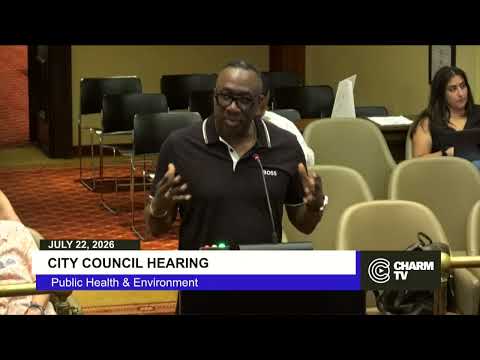
Residents and providers who testified during the public-comment period described sharply different experiences. Jan Evelyn, a Brooklyn resident, said visible drug activity and property crime surrounding recovery facilities have made her neighborhood feel unsafe and asserted that "there are 34 drug treatment and rehab centers located within the Brooklyn, Brooklyn Park, and Curtis Bay communities. 34, let that sink in." Evelyn asked the council to investigate why the state’s listings appeared not to reflect that count and pressed for city action to protect parks and schools near some centers.
Vin McCormick, who said he has operated recovery houses since 2019, told the committee that some providers opened without following the correct licensing steps and described how his organization later sought residential treatment licenses (3.1 and 3.3) and reasonable-accommodation permits so the homes would comply with state and city rules. "You should make that neighborhood better because you're there, not worse," he said, urging better provider-neighborhood communication.
Tanya Richardson, an administrative director for a behavioral health program, described the reasonable-accommodation application process as complicated and confusing for providers, saying applicants sometimes miss timelines and feel "defeated," and requested technical assistance to complete applications.
Dan Rabbit, policy director at Behavioral Health System Baltimore (BHSB), gave a technical briefing on how programs are classified and regulated. He said licensed substance use disorder clinics must hold Maryland Department of Health licenses and agreements to cooperate with the local behavioral health authority, while recovery residences are "just a house" that may seek voluntary certification rather than full licensure. Rabbit told the committee the state placed a pause on new enrollments for psych rehabilitation programs (PRPs), partial hospitalization programs (PHPs) and intensive outpatient programs (IOPs) starting 07/01/2024 and that pause has been extended through 12/31/2026 to allow regulatory changes and federal approval of the pause. He said revisions to COMAR 10.63 are intended to increase oversight and will require recovery residences to be certified.
Rabbit also said the Behavioral Health Administration (BHA) has directed local behavioral health authorities to cut 13% from certain grants and operations; BHSB said it is developing recommendations about how to implement those cuts and will report back when decisions are finalized. He described BHSB’s existing oversight tools — audits, site visits, corrective action plans and a complaint portal — and encouraged residents to file complaints so investigations can be opened.
Council members pressed housing and planning agencies on enforcement limits. A DHCD representative explained that many complaints generate property‑maintenance citations (trash, high grass) handled by inspectors, and that pulling a use permit or revoking a reasonable accommodation does not immediately close an operation; more serious or repeat violations can be referred to the legal section for court action, a process that can take weeks to months. DHCD said multi‑agency coordination occurs through a mayoral task force that meets weekly and includes transportation, fire, health and licensing entities.
Several council members — including Councilman Conway and Councilwoman Odette Ramos — said they had been surprised to learn of facilities opening in their districts and pressed staff for clearer notification processes and consolidated lists of recovery residences and reasonable-accommodation approvals. Ramos and other members asked for a "tiger team" or committee work to build accountable tracking while respecting applicable privacy rules.
On zoning, Councilman Blanchard noted Transform Baltimore changes and contrasted Baltimore City’s rules with other Maryland jurisdictions that limit bed counts or lot sizes; a Department of Planning official said no recent zoning changes address these issues and suggested consulting the law department about tools used elsewhere.
No formal motions or votes were held during the hearing. Chair Porter asked agencies to provide follow-up information, including address lists of sites of concern and the status of any tiger-team work. The committee closed public testimony after a brief final speaker attempt and indicated it would continue oversight work.
Why it matters: Council members face the challenge of balancing access to treatment with neighborhood quality-of-life concerns. The state regulatory changes Rabbit described (COMAR 10.63 revisions and the Medicaid enrollment pause) could shift where responsibility and authority lie for certification, inspection and enforcement of recovery residences. Residents pressed for clearer data and stronger interagency action to address concentrated impacts in specific neighborhoods.
No vote was taken. Committee staff agreed to follow up on requests for lists of addresses cited by residents, the status of interagency coordination, and any additional information on how COMAR changes will be implemented at the local level.