Get Full Government Meeting Transcripts, Videos, & Alerts Forever!
Get email alerts on the Landscaping Trees topic
No spam. Unsubscribe anytime.
Planning board debates landscaping rules, palms and canopy recovery, schedules May 18 workshop
Summary
Board reviewed proposed Article 5 landscaping rules, debated whether palms should count toward tree requirements and how to enforce replacement; members discussed changing the ratio from 1 tree per 50 feet to 1 per 40 feet, minimum planting size, and capping palm credits; a follow-up workshop was scheduled for May 18.
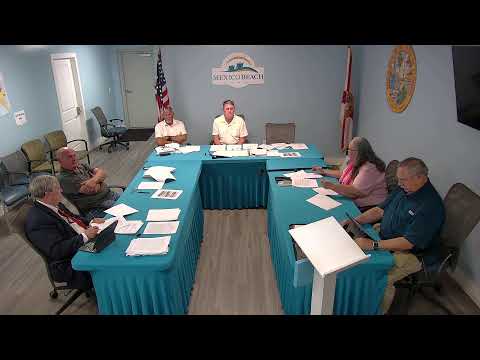
The Mexico Beach Planning & Zoning Board devoted much of its May 4 meeting to proposed revisions to Article 5 (landscaping), debating how to rebuild the town’s tree canopy while remaining enforceable and fair to property owners.
Laura, the planner presenting the revisions, said the chapter covers landscaping, buffer zones and tree protection and noted that much of the previous Article 4 text relates to floodplain management and will be packaged later. On trees, staff proposed not counting palm trees toward the required tree count and requiring 40% of plantings to be native species (determinations to reference the Florida Native Plant Society tool).
Public commenter John Harrell asked whether the buffer chart applies to single-family lots; staff answered it is generally meant for platted subdivisions and development orders rather than ordinary single-family building permits. In a lengthy board discussion, members raised Hurricane Michael-era canopy loss as a central policy goal: one board member cited data he said came from federal agencies estimating 60–80% tree-cover loss in the most impacted zone of Mexico Beach and urged requiring more shade/hardwood trees rather than allowing developers and homeowners to satisfy requirements with palms.
Board members proposed concrete options to restore canopy: change the per-lot requirement from one tree per 50 linear feet to one per 40 feet; set a minimum planting height (the board discussed a 12-foot minimum); and limit the proportion of palms that can count toward required trees (members discussed caps from 20–50% and converged on 40% as a working maximum while discussing 30% as an alternative). Members also emphasized enforcement mechanics: tying checks to certificates of occupancy, photographing lots at CO and creating a one-year compliance check.
No final ordinance was adopted; staff agreed to prepare red-line language and a more complete native-species list for review. The board set a special workshop on May 18 to finalize landscaping language (including a pending environmental/floodplain section) before forwarding recommendations to the council.
What’s next: staff will produce draft language that reflects the board’s numerical options and enforcement proposals for the May 18 workshop.