Get Full Government Meeting Transcripts, Videos, & Alerts Forever!
Get email alerts on the C And D Recycling topic
No spam. Unsubscribe anytime.
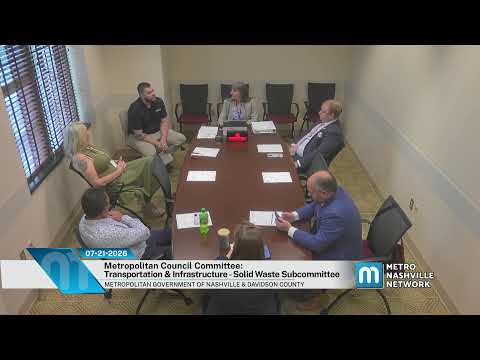
Subcommittee weighs mandatory C&D recycling and expands compost pilots amid cost concerns
Summary
Officials discussed moving C&D recycling from optional to required in stages, completing waste audits, and continuing a 750-household and school composting pilot; members asked staff for economic analysis and noted landfill proximity and tip-fee implications.
Committee members and staff discussed possible next steps to increase diversion through construction-and-demolition (C&D) recycling and expanded composting pilots.
Matt Purvis said the draft approach would shift C&D recycling from optional to required in stages based on project size, a change that could materially raise the city’s overall recycling and diversion rates because the county receives substantial C&D material from both in-county and out-of-county construction.
"Most construction and demolition stuff is very highly recyclable — concrete, brick, drywall, metal, wood — and if we were to move from optional to required recycling for C&D, it would catapult us into being a very large recycler in the country," Purvis said.
Committee members asked about direct financial benefits to Metro. Purvis and others explained that contractors typically sell recovered material and Metro currently collects municipal tip fees (reported at $6 per ton for municipal solid waste and $4 per ton for C&D). Purvis noted some C&D tonnage is underreported and the city may be missing fee revenue; he said grants might be available but could not guarantee direct net revenue to Metro.
On composting, the chair reported a successful 750-household pilot and a Metro Public Schools compost pilot; staff said they are ready to support school efforts but budget details at Metro Public Schools were unclear. One committee member raised concerns about composting costs and greenhouse-gas tradeoffs, noting organics in landfills generate methane unless captured and stressing the need for an economic reality check. Staff said composting costs usually improve with scale and asked for an analysis to show when composting becomes cost-effective.
Members also discussed practical recycling expansions such as additional foam-recycling bins at convenience centers, moving or replicating a densifier machine (current electrical and physical constraints complicate moving it), and repairing roll-off boxes so more specialized boxes can be placed at sites to improve separation and revenues.
The subcommittee asked staff to return with economic analyses on composting and C&D recycling opportunities and to update the committee on school composting and foam-recycling logistics at a future meeting.