Get Full Government Meeting Transcripts, Videos, & Alerts Forever!
Get email alerts on the Criminal Justice topic
No spam. Unsubscribe anytime.
Kentucky Attorney General says 240 violent offenders could be freed if appeals court doesn’t act on Safer Kentucky Act challenge
Summary
Kentucky Attorney General Russell Coleman told a national program that a class-action challenge and a judge’s ruling threaten to make 240 violent offenders eligible for release by undoing parts of the Safer Kentucky Act, which raised parole eligibility to 85% for certain violent felonies.
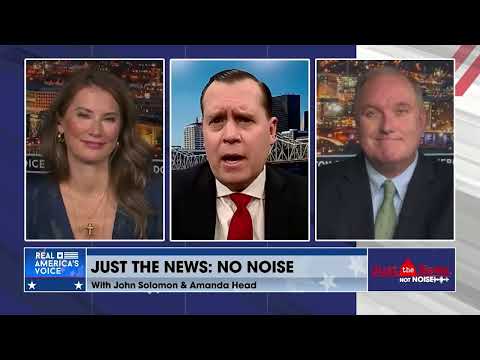
Kentucky Attorney General Russell Coleman said in an interview that roughly 240 incarcerated people could become eligible for release unless the Kentucky Court of Appeals reverses a judge’s action that, he said, undermines the Safer Kentucky Act.
Coleman described the stakes as high for public safety. "These are carjacking, strangulation, homicide, attempted murder," he said, adding that the law was changed to require those convicted of certain violent offenses to serve at least 85 percent of their sentence before parole eligibility. "They were serving 20% before that, 85%."
Coleman said a class-action challenge by some incarcerated people has produced a judicial order that, unless stayed or reversed, could make the group eligible for earlier release. He attributed the policy change to the Commonwealth’s legislature and blamed courts, saying they are not applying "common sense." "The challenge is courts that aren't applying common sense," he said.
Coleman framed strangulation charges as particularly serious and cited what he described as data linking prior strangulation offenses to later lethal violence. "The data says that 80 percent, roughly 80 percent of those that kill police officers have committed a strangulation offense," he said, arguing that releasing people convicted of strangulation would endanger patrol officers, troopers and deputies.
The moderator and questioner pressed on the policy rationale and whether prior policing doctrines were relevant. Coleman said the legislature made strangulation an aggravated felony to reflect the danger the offense poses and defended the Safer Kentucky Act as "common sense" public-safety policy.
No court outcome or release had been reported in the interview. Coleman described the situation as contingent on appellate action and legal process; he urged courts to apply the statute as passed by the legislature.
What happens next: Coleman said the matter depends on action by the Kentucky Court of Appeals; he did not specify deadlines or a date for any potential releases. "Unless the Kentucky Court of Appeals acts because of the action of a single judge, 240 of these violent offenders are gonna be released to counties across our commonwealth," he said.