Get Full Government Meeting Transcripts, Videos, & Alerts Forever!
Get email alerts on the Child Welfare topic
No spam. Unsubscribe anytime.
Kentucky attorney general unveils updated statewide protocol for child-abuse response, cites 29% rise in cases
Summary
Kentucky Attorney General Russell Paul and child-advocacy leaders announced a revised 'Kentucky model protocol' to guide multidisciplinary teams across 15 advocacy centers, citing nearly 7,800 new child-abuse cases in a 12‑month period and committing to statewide training and implementation.
Kentucky Attorney General Russell Paul unveiled a revised state protocol for multidisciplinary teams responding to child abuse and paid tribute to the professionals who work directly with victims, saying the update is intended to speed coordinated responses and reduce secondary trauma.
Paul told attendees the new "Kentucky model protocol for local multidisciplinary teams" is not just a document but a blueprint for field use across the Commonwealth's 15 children's advocacy centers. He cited recent caseload figures as the central rationale: "from July 2024 to July 2025, local teams ... reviewed almost 7,800 new cases," and he said, "This is a 29% increase year over year." The attorney general said the protocol modernizes decision matrices and flowcharts to clarify who to call and when in order to "mitigate harm to our kids."
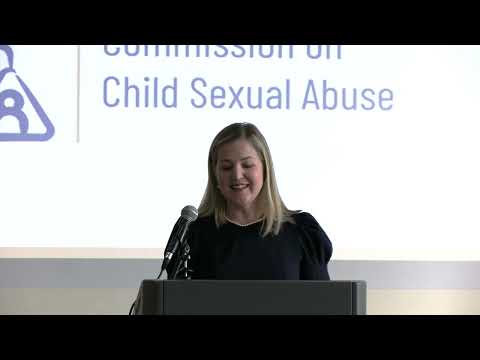
The protocol was presented at a commission event in Frankfort and accompanied by a proclamation declaring full support for the revised model (adopted by the Kentucky Multidisciplinary Commission on Child Abuse on 02/10/2026). Paul said the document will be used in trainings and implemented across medical, law-enforcement, prosecution and advocacy partners so that a child who discloses abuse receives coordinated medical, forensic and support services.
Joelle Hurst, identified in remarks as founder and nurse manager of Norton Healthcare's pediatric and adult sexual-assault nurse examiner program, described both institutional practice and a family experience that, she said, illustrated why the protocol matters. Hurst described 24/7 medical-forensic coverage across multiple hospitals and recounted how, before multidisciplinary teams and advocacy centers, families were forced to repeat their histories and missed forensic examinations and evidence collection. "When Jay died, I couldn't stop asking myself, what can I do?" she said, explaining her choice to train as a sexual-assault nurse examiner and to help implement trauma‑informed care.
Organizers listed the protocol's goals as protecting child victims, promoting high‑quality coordinated services, and minimizing retraumatization during investigation and prosecution. The commission chair read a proclamation urging professionals across systems to "dedicate themselves to fulfilling their duties" under the model protocol and invited representatives of prosecutor associations, the Kentucky State Police, sheriffs' associations and law‑enforcement chiefs to sign. The chair noted that pages 16–19 of the protocol include practical flowcharts for decisionmaking and encouraged media and practitioners to review that section.
The announcement focused on implementation rather than new legislation: organizers emphasized training, field adoption and cross‑agency coordination as the next steps. No formal vote or statutory change was recorded at the event; the proclamation and the adoption date named by the commission describe the protocol as commission‑adopted policy to be carried into practice.
The event closed with organizers inviting attendees to sign a commitment table and with thanks to commission members, health care partners and advocacy staff. Officials said training schedules and rollout plans will follow as the commission supports local teams in applying the protocol.