Get Full Government Meeting Transcripts, Videos, & Alerts Forever!
Get email alerts on the Plat Amendment Access topic
No spam. Unsubscribe anytime.
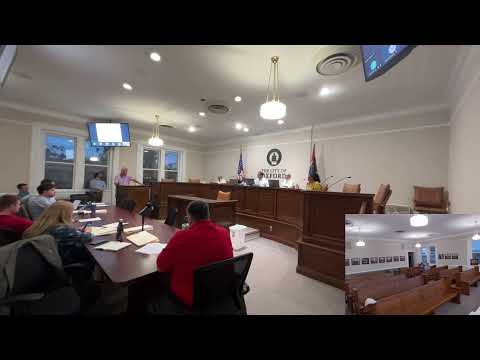
Planning commission recommends denial of plat amendment to extend Berkshire Drive into county property
Summary
The commission voted 4‑1 to recommend denial of a plat amendment (case 3329) that would vacate a residential lot in Oxford Commons to create a future public right‑of‑way; staff cited traffic and procedural concerns and commissioners said the request was premature without firm attachments and guarantees.
The Oxford City Planning Commission recommended denial, 4‑1, of a proposed plat amendment that would eliminate Lot 21 in the Oaks at Oxford Commons (case 3329) and reserve that space as a potential public right‑of‑way to extend Berkshire Drive north into property outside the city limits.
Staff told the commission the amendment would allow Berkshire Drive to continue north to property currently in the county and that conceptual plans indicate up to about 91 lots could be created north of the existing phases; staff nevertheless recommended denial because the conceptual plan did not adequately address potential traffic increases on local residential streets and because the northern property is outside city limits. Staff also referenced Mississippi subdivision rules about notice to and consent by persons directly interested or adversely affected.
Taylor McGaughn, a county landowner who said he would sell a portion of his property to enable the connection, urged approval so he could avoid forced sales and said the change would facilitate affordable housing. Developer David Blackburn said he and his team were prepared to cap total units and accept written restrictions tying the new acreage to the Oxford Commons unit cap; Blackburn said he was not asking tonight for subdivision approval, only a plat amendment to preserve the later possibility of access. He also offered to limit additional units in the combined areas so that the total would not exceed a stated cap and to deed right‑of‑way to the city when appropriate.
Commissioners and staff wrestled with the appropriate procedural vehicle. Staff and the city attorney warned that vacating a residential lot to reserve a public right‑of‑way that would connect to undeveloped county property raised questions about what the commission was being asked to approve and whether subsequent steps (rezonings, master‑plan amendments, or board of aldermen actions) would be required. One commissioner described the request as premature until the proposed northern development and road connections were better specified.
Because an adjacent property owner (whose parcel is outside the plat) later registered as an objector in the public record, commissioners decided she should be allowed to appear in person and that the commission should hear from her directly. By consensus, the commission voted to table the request to the May 11 Planning Commission meeting so the objector could attend in person and the record could be clarified. If the commission or mayor/board later considers the connection, staff noted conditions and guarantees (e.g., bonding, restrictive covenants, or master‑plan changes) may be needed to limit unintended build‑out or impacts.
The record shows the staff recommendation was denial and that commissioners preferred additional procedural clarity and direct testimony from the objector before making a formal recommendation to the mayor and board of aldermen.