Get Full Government Meeting Transcripts, Videos, & Alerts Forever!
Get email alerts on the Tax Ballot topic
No spam. Unsubscribe anytime.
Council sends historic‑preservation tax extension to voters, raises museum share to 30%
Summary
After a staff presentation and public comments, the council voted to refer an ordinance to extend the city’s 0.125% historic‑preservation sales tax for 10 years, add flexibility for how funds may be used (including capital projects and program support), and increase the museum allocation from 20% to 30%; staff estimates ballot language should account for up to $1.5 million annually to avoid TABOR refund issues.
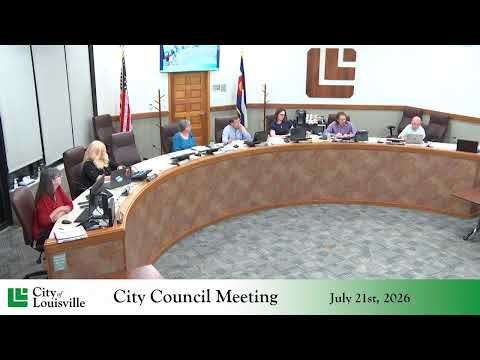
Council voted July 21 to send to the Nov. 3, 2026 special election a ballot ordinance to extend the city’s 0.125% historic preservation sales tax for another 10 years and revise spending rules. Community development director Rob Zuccaro (speaker 14) said the measure would keep the same tax rate, expand eligible uses to include city programs and capital projects that promote the city’s history and cultural resources, and increase the allocation to the Louisville Museum campus from 20% to 30%.
Zuccaro said the tax was first approved in 2008, renewed in 2017 and is scheduled to expire in 2028; the new 10‑year extension would start 01/01/2029 but the increased museum allocation and some flexible spending would begin 01/01/2027 if voters approve the measure. "We were recommending the $1,500,000 annually in the ballot question in order to have a lot of buffer," Zuccaro said, explaining the figure is intended to avoid TABOR refund and calculation issues.
During two public‑comment rounds, residents expressed mixed views: Tiffany Boyd (speaker 17) urged a larger museum allocation and said the flexibility could support equity and sustainability goals; Matt Jones (speaker 15) and others cautioned against mission creep and urged more aggressive incentives to preserve historic buildings. Council discussion emphasized the task force recommendations and the need to revisit fund allocation strategy after the election.
Council approved the ordinance on second reading and referred the ballot question to the coordinated Nov. 3 special election; the estimated up‑front election cost is about $32,000, staff said.