Get Full Government Meeting Transcripts, Videos, & Alerts Forever!
Get email alerts on the Transportation topic
No spam. Unsubscribe anytime.
State transportation officials outline multi-roundabout plan, lane widening for US-127 corridor
Summary
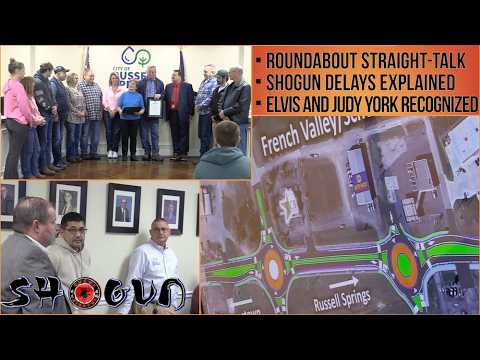
Kentucky Transportation District 8 presented a multi-stage plan for US-127 improvements in Russell Springs, proposing roundabouts at several intersections, widening north of the high school to four lanes and a shared-use path; officials cited crash data and said initial construction of a first group of roundabouts could begin next spring, pending environmental review and final design.
KYTC District 8 representatives laid out a multi-year plan for US-127 in Russell Springs on Feb. 12, arguing a mix of roundabouts and targeted lane widening will reduce crashes, improve traffic flow and add pedestrian facilities.
Jeff, a District 8 presenter, told the council the study area extends from the Jamestown bypass to KY-619 and includes 12 intersections under consideration. He said there were 246 crashes in the corridor from 2019 through 2024, including 57 in the most recent year, and one fatality. His presentation emphasized that roundabouts reduce vehicle conflict points and lower the severity of crashes compared with traditional signals.
Why it matters: Officials said the combination of roundabouts and widening addresses both safety and congestion on a busy two-lane stretch that carries roughly 11,150 vehicles per day in places. The plan also includes a continuous shared-use path to connect schools and shopping areas and to provide safer crossings for pedestrians.
What KYTC proposed: The presentation described single- and two-lane roundabout designs, raised medians and marked pavement for lane choice, stamped mountable elements for semis to off-track into, and lighting. For the northern portion the agency recommended two-lane roundabouts; for several locations north of the high school the plan calls for conversion to four lanes. The presenter said a prioritized set of four roundabouts is the likely first construction package and that the total initial right-of-way needed for the first phase is about 6.19 acres, mostly within existing corridor limits.
Timing and process: The presenter said the project will require environmental review and right-of-way work, which can slow delivery; he estimated individual roundabout construction could take about three to four months and suggested the first group could be built next spring or summer if reviews proceed. He also said some roundabouts could be installed in as little as 30–45 days for the geometric changes alone, while wider sections and bridges require more time.
Community concerns and next steps: Council members and residents asked about truck turning radii, school-bus operations, signage and landscaping in roundabout centers. The presenter said larger-diameter layouts and mountable inscribed areas are designed to accommodate semi-trailers and that school buses can navigate the proposed geometry. He offered to share slides and video and to hold stakeholder meetings for businesses and schools.
The presentation ended with the agency pledging further public outreach and additional design materials; the council indicated support to move forward with design and environmental work. The project will advance to environmental review and more detailed design before any construction contract is advertised.