Get Full Government Meeting Transcripts, Videos, & Alerts Forever!
Get email alerts on the Chamber Governance topic
No spam. Unsubscribe anytime.
Junction City and Gary County officials weigh restructuring of chamber, EDC and military‑affairs functions; mayor named temporary EDC appointee
Summary
Officials reviewed the 2017–2018 master agreement that ties the chamber, economic development commission (EDC), military affairs commission (MAC) and CVB together, debated multiple restructuring options, authorized attorneys to draft temporary amendments to avoid dual obligations for the MAC position and appointed the mayor as a temporary EDC appointee while applications are solicited.
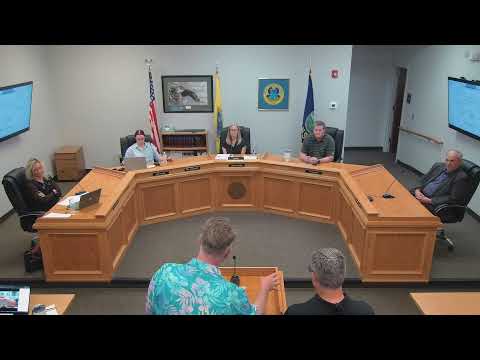
City and county elected officials and leaders of the Junction Area Chamber of Commerce met in a joint public session to review the 2017–2018 master agreement that governs how tax dollars and administrative oversight are shared among the chamber, the Economic Development Commission (EDC), the Military Affairs Commission (MAC) and the Convention/Vistors Bureau (CVB).
Mister Montoya, the chamber’s legal counsel, told the gathering that Exhibit A of the master agreement created an advisory economic development committee and that the contract can be terminated or modified only by all three parties. "If you provide notice by July 1, the preceding year, it's gonna terminate effective December of '26," he said, noting that termination would return some responsibilities to the joint city/county board unless the parties renegotiate the agreement.
City Attorney Britton Stites laid out a set of structural options—presented as a working concept he called the Junction City Prosperity Alliance (JCPA)—that would redispatch the four functions in combinations ranging from a single interlocal oversight board to a more siloed approach that leaves the chamber membership function independent. Stites highlighted tradeoffs involving funding streams (ad valorem mills and the transient guest tax), reporting and personnel arrangements and the differing grant eligibility of 501(c)(3) versus 501(c)(6) entities.
Participants debated the merits of keeping the consolidated structure—citing shared efficiencies on rent, administrative support and one‑stop coordination—against splitting functions to reduce governance friction and clarify accountability. Several commissioners and chamber leaders warned that the chamber’s membership revenue alone currently would not cover salaries if it were left wholly on its own. The executive director of Junction City Main Street stressed that Main Street’s 501(c)(3) status lets it pursue grants that a chamber 501(c)(6) cannot and urged preserving that grant capacity.
The MAC’s immediate operations and events—chief among them a military‑affairs breakfast and Fort Riley relationship work—drew particular attention. Multiple speakers said the MAC had produced strong results when more directly managed or supported by the city. A current contractor who has been serving as the military‑affairs liaison, Mason Wilson, addressed the group and said he was willing to continue the work but would not return to the chamber's previous internal structure without clear operational change.
On procedural matters the body took two actions recorded in the public meeting. First, the commission moved and seconded a motion to have Mayor Terry Butler temporarily fill one EDC seat "until we can take applications and find a suitable person for the position up to 90 days." The motion carried by voice vote; the transcript records the question, the aye response and the chair’s announcement that the motion carried but does not include a roll‑call tally.
Second, commissioners authorized the city attorney, in consultation with the city manager and legal counsel for the other entities, to pursue an amendment or temporary addendum to the current master agreement so the city and county would not be dual‑obligated for the MAC position or otherwise be exposed to duplicative payroll/contract obligations. The motion specified that any temporary arrangement could be effective through Dec. 31, 2026, if needed; that motion also carried by voice vote.
Officials said attorneys and staff would work on draft language, that the jurisdictions would open an application process to fill the vacancies on the EDC, and that the various governing bodies would reconvene once legal language and financial details were prepared. Several participants urged short timelines because upcoming events—including the MAC breakfast and a teachers’ breakfast—require staffing and sponsorship commitments within weeks.
What happens next: city and county attorneys will confer with chamber counsel to draft a temporary agreement or amendment to clarify funding and supervisory roles for the MAC position; the city will post or solicit applications to fill EDC vacancies; and the jurisdictions intend to review structural options in follow‑up public meetings. The joint meeting adjourned after those next‑step commitments were recorded.