Get Full Government Meeting Transcripts, Videos, & Alerts Forever!
Get email alerts on the Volunteerism And Corporate Engagement topic
No spam. Unsubscribe anytime.
Columbus forum argues volunteering and corporate programs can rebuild civic connection and boost employee retention
Summary
Panelists at a Columbus Metropolitan Club forum urged businesses to treat community investment as talent strategy, described practical employer tools such as volunteer portals and paid volunteer time, and highlighted nonprofit pressures and the need for stronger board governance.
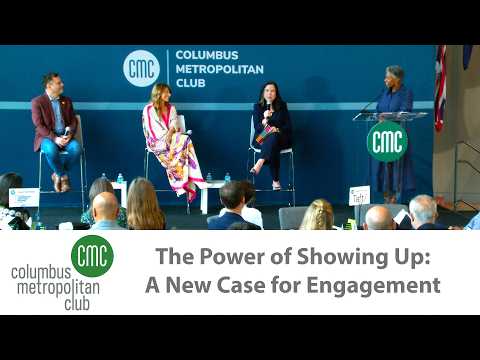
Columbus — Panelists at a Columbus Metropolitan Club forum on civic engagement on July 23 urged companies and residents to treat volunteering as both a civic good and a strategic tool for workforce retention and nonprofit resilience. Janelle Coleman, president of the American Electric Power Foundation, highlighted a national push to expand volunteerism and pledged investment to strengthen local volunteer ecosystems.
"Points of Light launched Reimagining Service 2035 to double the number of Americans who volunteer," Coleman said, citing the initiative's goal to raise volunteer participation from about 75,000,000 to 150,000,000 annually and to invest $100,000,000 to support that work. The initiative, she said, aims to make volunteering more accessible and impactful.
Why it matters: Panelists said volunteer programs deliver direct benefits to community organizations while helping employers recruit, develop and retain talent. That makes corporate support a potential lever for both civic outcomes and business performance in a period of rising community need and tighter nonprofit budgets.
Matthew Goldstein, CEO of Besa, described how a personal volunteer experience on a suicide hotline led him into the nonprofit sector and helped scale his organization. "I started to volunteer on a suicide hotline thinking I was going to save lives, and it actually saved my life," Goldstein said. He told the forum Besa grew from a roughly $24,000 budget in 2012 to more than $2,000,000 and a staff of about 16–17, crediting board support and volunteer infrastructure for that expansion.
Panelists outlined employer practices that make volunteering repeatable and meaningful. Carrie Munn Smith, assistant vice president for inclusive culture change and community impact at Grange Insurance and president of Grange Enterprise Gives, described an internal volunteer portal that lists nonprofit needs and lets associates filter by interest, plus a policy that allows associates to earn up to two paid days off annually for service. Smith said Grange also links volunteer hours to donations and provides training so leaders serving on nonprofit boards understand fiduciary responsibilities.
"When our associates feel more connected to each other, to the community, to our mission and purpose, they're more engaged," Smith said, adding that Grange tracks community-impact metrics alongside financial performance on its enterprise scorecard.
Carrie Millard, founder and CEO of Millard Consulting, focused on governance, saying nonprofits need healthy boards and a strong board–executive relationship. She cited common pain points — unclear roles and lack of support — and urged investment in recruitment and leadership development for board members.
During audience questions, attendees raised whether capitalism and community engagement can coexist and how to engage younger professionals who prioritize purpose. The panel said aligning community impact metrics with business goals and offering clear, mission-linked volunteer opportunities help attract and retain younger workers. Audience speakers included Wendell Tober, a community liaison officer with the Columbus Division of Police, who encouraged leaders to invite and mentor potential volunteers from nontraditional pools.
Panelists also discussed volunteer retention: making sign-up easy, offering clear reasons to volunteer, demonstrating direct impact, and extending personal invitations are important to turn a first-time volunteer into a repeat volunteer. "There are so many nonprofits in Columbus that would be happy to help connect anyone interested in service to service," Goldstein said.
The forum closed with thanks to sponsors and a reminder that Columbus still faces funding and capacity challenges in the nonprofit sector; panelists urged organizations to prepare for changing funding cycles and build internal capacity to weather those changes. The Columbus Metropolitan Club announced its next forum, "Racing to Build a New Midwest."