Get Full Government Meeting Transcripts, Videos, & Alerts Forever!
Get email alerts on the Police Oversight topic
No spam. Unsubscribe anytime.
Residents urge Worcester City Council to create civilian review board after DOJ findings; council pauses action for further review
Summary
Dozens of residents told the Worcester City Council that independent civilian oversight with subpoena power is needed after a Department of Justice review and local studies; the council suspended rules to consider the item and referred it for further review rather than adopting a board on the spot.
Dozens of residents urged the Worcester City Council on an evening of extended public comment to create an independent civilian review board with subpoena power, citing a Department of Justice report, a city-commissioned research bureau study and years of settlements that speakers said show repeated failures of internal accountability.
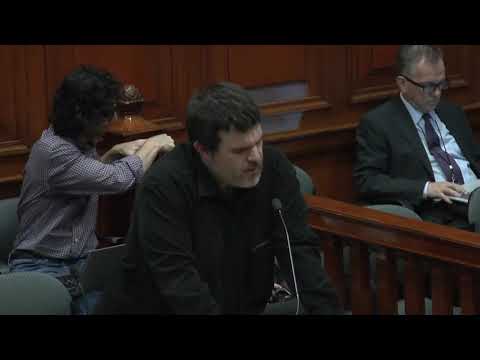
The testimony, centered on agenda item 10.5a, filled the council chamber and ranged from personal accounts of alleged misconduct to organizational statements calling for a CRB that can investigate complaints, access records and impose sanctions. "I'd like to comment on the long history of police corruption in Worcester," said Mary Sackstetter, a city resident, listing multiple settlements she said the city has paid and urging the council to adopt independent oversight "that would not cost as much as the legal actions taken against the city."
Supporters pointed to several formal reviews. Roberto Diaz, executive director of Worcester Interfaith, told the council the Department of Justice "found a years-long pattern of civil rights violations," and he cited the Worcester Regional Research Bureau and the Human Rights Commission as recommending local civilian oversight. Ellen Shemitz, a former chair of the Human Rights Commission, said the city manager's internal reforms do not substitute for independent review and detailed failures she said have persisted in access to misconduct records, data collection, and mandatory training.
Several speakers asked the council to give any oversight body investigative tools and subpoena power. "We need independence, access to data, subpoena power in this civilian review board," Abby Morinalaro, of District 4, said during public comment. Echo Luissant Collins, founder and executive director of 508 Cheers, told the council independent oversight "protects the public, but it also protects the integrity of the institution."
The city manager and administration representatives appeared on the floor later in the meeting to respond to council questions about the manager's recommendation. "We're doing everything we can based on our jurisdiction," the city manager said, describing efforts by inspectional services, the police department, and other offices to address community concerns, while noting limits of local authority and the need to coordinate with state agencies on some matters.
Rather than adopt a civilian review board at the meeting, the council first suspended rules to take up the item earlier in the agenda, then moved to hear public comments and discuss next steps. After the extended public participation period and discussion among councilors, the body did not vote to establish a board on the spot. The item was held under privilege and referred for additional review and follow-up with the city manager and the Public Safety Committee, per council procedure.
Speakers who backed a CRB repeatedly noted the cost of settlements as a fiscal argument for oversight. Several residents urged the council to prioritize transparency, saying that independent, well-funded review would produce better community trust and could reduce future litigation.
Next steps the council directed included receiving more documentation and reports: councilors asked the administration for timelines, an accounting of prior settlements and the findings of advisory bodies the manager had cited. The council did not take a final policy vote on the creation of a civilian review board; supporters said they expect to return with additional testimony and documentation at the follow-up review.
The council's decision to hold and refer the item leaves the question of whether Worcester will create an independent oversight body to future committee or manager reports; speakers and community groups said they will come back with renewed organizing if the council does not act.