Get Full Government Meeting Transcripts, Videos, & Alerts Forever!
Get email alerts on the Shipbuilding Supply Chain topic
No spam. Unsubscribe anytime.
Chair urges U.S. push to counter China in global shipbuilding and introduces H.R. 8615
Summary
At a House Committee on Foreign Affairs hearing, the committee chair framed commercial shipbuilding as a national security threat, cited Chinese dominance in capacity, and introduced H.R. 8615, the Fleets Now Act, proposing training, allied industrial partnerships and tax incentives to rebuild U.S. yards.
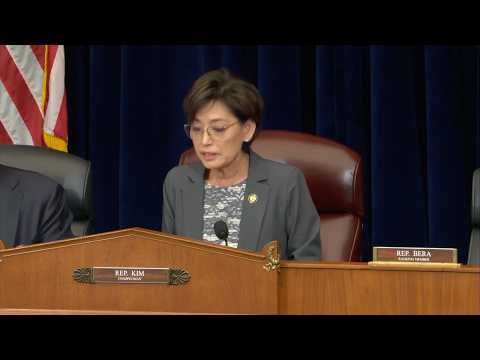
The Chair opened a House Committee on Foreign Affairs hearing on U.S. commercial shipbuilding, saying the sector is central to national security and economic sovereignty and arguing the United States must act to reduce dependence on Chinese yards.
"Shipbuilding lies at the center of our national security, our economic sovereignty, and the future of free commerce," the Chair said as members convened for the hearing titled "Charting a New Course: Countering China's Dominance in Global Shipbuilding." The Chair said U.S. policymakers for decades "looked the other way" while the Chinese Communist Party pursued a coordinated strategy to dominate the market.
The Chair cited capacity figures to underline the imbalance: "Today, the People's Republic of China controls over 50% of global commercial shipbuilding capacity," and "the United States accounts for less than 0.1 percent," he said, presenting these numbers as evidence that America lacks industrial scale in commercial ship construction.
The hearing framed several risks tied to that industrial imbalance. The Chair asserted that commercial purchases in Chinese yards "directly subsidize the People's Liberation Army Navy" and warned that Beijing's control of shipbuilding capacity gives it leverage over global supply chains that could be "weaponized" in a conflict over the Taiwan Strait. The Chair also said U.S. military logistics rely on an aging fleet of auxiliary and sealift vessels, heightening the strategic stakes.
To respond, the Chair announced legislation. "That is why I introduced H.R. 8615, the Fleets Now Act," he said, describing the bill as including provisions to increase training for American shipbuilders. The Chair said the bill is intended to expand domestic workforce and industrial capacity rather than relying on foreign yards.
Beyond the bill, the Chair proposed integrating U.S. industrial capacity with key allies. "We must forge an aggressive shipbuilding alliance with the world's other maritime heavyweights, South Korea and Japan," he said, arguing that coordinated investment could free U.S. yards for high-end naval combatant production while leveraging allied commercial capacity.
As part of that strategy, the Chair urged pursuit of allied foreign direct investment and tax incentives to attract companies such as HD Hyundai, Hanwha Ocean and Imabari to buy and operate shipyards on American soil. He framed such incentives as a way to revitalize underused domestic yards and rebuild industrial resilience.
The hearing's opening remarks emphasized urgency and a combination of industrial, diplomatic and legislative steps. The Chair concluded by calling for a rebuild of U.S. shipyards, stronger ties with allied shipbuilders and sustained policy efforts to reduce Beijing's maritime market power.
No formal vote or amendment on H.R. 8615 was recorded during this opening sequence; the bill was announced and outlined but not considered for immediate action.