Get Full Government Meeting Transcripts, Videos, & Alerts Forever!
Get email alerts on the Un Reform topic
No spam. Unsubscribe anytime.
House Foreign Affairs Committee chair criticizes U.N., urges greater accountability
Summary
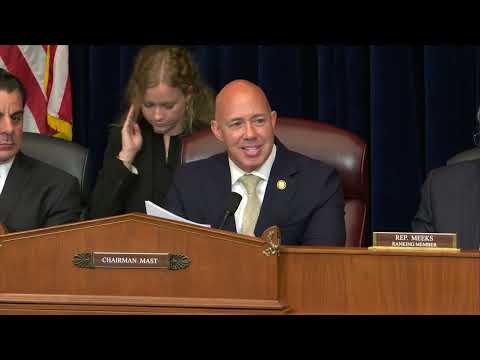
The chair of the House Committee on Foreign Affairs opened a hearing by sharply criticizing the United Nations as ineffective and calling for reforms and tools to hold the U.N. accountable, citing alleged failures in Haiti, concerns about UNRWA, and controversial committee appointments.
The chair of the House Committee on Foreign Affairs opened the hearing by urging stronger U.S. leverage to force accountability and reforms at the United Nations, saying the organization has become "a corrupt entrenched den of snakes." The chair thanked Ambassadors Waltz and Bartos for testifying and said the session’s purpose was to discuss tools to implement U.S. policy and oversight at the U.N.
The chair said the U.N. has grown into a sprawling bureaucracy of 193 member states with more than 100,000 personnel and that in 2024 the U.N. system received over $68,000,000,000 in revenue across agencies, funds and programs. "I don't think any of that bloat made it more effective," the chair said, arguing that the scale of the organization has not produced better results.
As an example of operational failure, the chair criticized a U.N.-backed multinational security operation in Haiti, saying the United States paid more than $1,000,000,000 for roughly 1,000 Kenyan peacekeepers who "abysmally failed" to carry out the mission. He added that the Haitian government later hired an American to perform the task at lower cost and with what he described as greater success. Those claims were presented by the chair as evidence that some U.N. missions have not delivered expected results.
The chair also objected to U.N.-funded programs he described as inconsistent with U.S. priorities, saying the U.S. "can no longer fund programs in the U.N. that support abortion, radical gender ideology, LGBTQ education, and other leftist projects that do nothing for the American people." He framed those objections as part of a broader argument that U.S. funding should align with American foreign-policy interests.
On member-state appointments and committee leadership, the chair said Iran's nomination to a U.N. committee on human rights and counterterrorism and Iran's selection as a vice president for a body related to nuclear nonproliferation show a credibility problem for the U.N. He also alleged that UNRWA, the U.N. relief agency in the Middle East, "puts Hamas operatives on its payroll," and said the U.N. has "institutionalized antisemitism" and has disproportionately condemned Israel following a major attack. Those assertions were advanced by the chair to argue that institutional and political problems require reform and stronger U.S. oversight.
The chair described his posture toward the U.N. institutionally, saying he was the first House Foreign Affairs Committee chairman in history to vote against funding for the United Nations and that he would oppose creating or funding a comparable new organization that placed the United States on equal footing with Russia or China while retaining programs he found objectionable.
The chair concluded by praising the ambassadors' efforts to "tear out the rot" and said he looked forward to hearing their testimony about successes, obstacles and specific U.N. institutions or cultures where reform has been difficult. Ambassadors Waltz and Bartos were introduced to present and answer questions.
The hearing moved next to testimony from the U.S. ambassadors to the United Nations; further discussion and questioning were expected to follow.