Get Full Government Meeting Transcripts, Videos, & Alerts Forever!
Get email alerts on the Un Reform topic
No spam. Unsubscribe anytime.
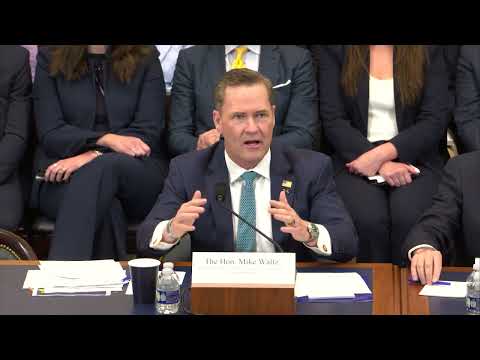
Committee member praises U.S.-led U.N. reforms, urges deeper cuts and more U.S. representation
Summary
A member of the House Committee on Foreign Affairs told the committee that U.S.-led reforms have reduced U.N. staff and spending, shifted aid toward trade and pooled logistics, and must continue with benefit reductions and greater American staffing in U.N. agencies; the claims were made in a prepared statement and were not independently verified in the hearing.
A member of the House Committee on Foreign Affairs told colleagues that the United States is "getting the United Nations back to basics, back to maintaining the peace, and maintaining security around the world," and urged further cuts and staffing changes to the U.N.
The committee member said the U.S. reform effort had secured what he characterized as the first-ever consensus budget cut at the United Nations and claimed it reduced the U.N. budget by $1,000,000,000 over six months. "We cut it by 1000000000 dollars over the last 6 months alone," he said, and contrasted U.N. consensus with the difficulty he said would face a U.S. Congress of 535 members.
He attributed other outcomes to the reform push, saying the U.N. had "eliminated 4,000 headquarters bureaucrats" and "cut peacekeepers by 25% around the world," and that missions that had not met their mandates, citing Unifil and Lebanon, were being ended or renegotiated. "We have made it clear that Unifil needs to stand down and negotiations are underway with what would replace it," the committee member said.
On development policy, the speaker argued the U.N. should emphasize trade over direct aid and described a shift toward pooled funding and shared logistics intended to increase the share of assistance reaching victims of disasters. "Where it is needed, we have set up pooled funding where these aid agencies share warehouses, share logistics, share back offices so that aid can actually reach victims of earthquakes, tsunamis, famine," he said.
The committee member also cited diplomatic and security examples he said reflected U.S. success at the U.N.: a Security Council resolution condemning Iran's attacks that he said won support from 136 countries, a U.S.-backed Gaza peace plan he said won Security Council endorsement, and an account that "for the first time in a decade, there are 0 hostages in Gaza." He said in Haiti the prior administration had provided roughly $1,000,000,000 for about 1,000 Kenyan police, and that a new international gang suppression force with non-U.S. troops had cut U.S. costs by 75%.
Throughout the statement the speaker framed the program as restoring U.N. focus and called for additional reforms, including reducing benefits and increasing American representation in U.N. agencies and standard-setting bodies. "Our charge is to make the UN great again," he said in closing.
The remarks in the transcript were a one-sided statement of accomplishments and policy aims by the committee member; the transcript contains no on-the-record responses from other members, no formal motions, and no votes. Several claims of precise savings, staffing reductions and international majorities were presented by the speaker and were not independently verified during the recorded remarks.