Get Full Government Meeting Transcripts, Videos, & Alerts Forever!
Get email alerts on the Foreign Policy Iran topic
No spam. Unsubscribe anytime.
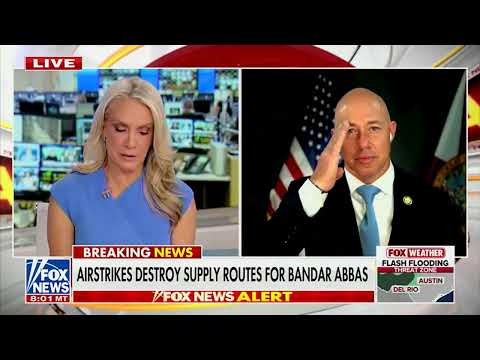
Rep. Brian Mast says U.S. strikes aim to cripple Iran’s supply lines; Sen. Schiff warns of escalation
Summary
In a broadcast interview, Rep. Brian Mast said recent U.S. strikes are targeting Iran’s supply and energy infrastructure to pressure Tehran back to talks, while Sen. Schiff warned the exchange risks escalation and political fallout.
Rep. Brian Mast said in an interview that U.S. strikes on Iran have focused on its supply and energy infrastructure in an effort to force Tehran back to the negotiating table. "We're hitting their supply routes, their infrastructure, energy infrastructure," Mast said, arguing those strikes are designed to keep equipment from reaching launch sites for drone attacks.
The interview framed competing views of the conflict. Mast, identified in the broadcast as a Florida congressman, described the Islamic Revolutionary Guard Corps (IRGC) as "effectively running the country" and said the United States must use military and economic pressure alongside support for Iranians who oppose the regime. "We will stand beside you," he said, adding the U.S. intends to target IRGC manufacturing and drone capabilities.
Sen. Schiff offered a contrasting emphasis when the moderator opened the floor to him. "Now that we are back in a full military exchange with Iran ... I would expect we will get more support," Sen. Schiff said, while warning that the handling of the conflict risks escalation and could have political consequences. He criticized the management of the war and said those concerns could affect midterm politics.
The moderator raised concerns about conditions inside Iran, citing a broadcast reference to a comment that the next uprising in Iran may be "a question of when, not if," and asked whether U.S. policy includes an operational plan to support Iranians beyond military and economic measures. Mast answered that the United States intends to work with Iranians willing to resist the IRGC and pointed to regional partners — including Kurdish forces and Gulf states such as Qatar, the United Arab Emirates, Bahrain, Saudi Arabia, Kuwait and Jordan — as potential on-the-ground allies.
Mast framed the current actions as a change from a long-standing status quo of attacks on shipping through the Straits of Hormuz and said the response was overdue for the sake of service members killed in earlier incidents. He argued that constricting Iran’s access to ports and supply lines "is the language that continually brings them to the table."
The interview included direct disagreement over the political framing of the conflict: Mast accused Democrats of previously downplaying the Iranian threat, while Sen. Schiff warned that mismanagement could escalate the situation. The exchange ended with the moderator thanking Mast for joining the program.
The interview did not record any formal policy decision or vote; it was a broadcast discussion of strategy, risks and political implications.