Get Full Government Meeting Transcripts, Videos, & Alerts Forever!
Get email alerts on the Budget Simulation topic
No spam. Unsubscribe anytime.
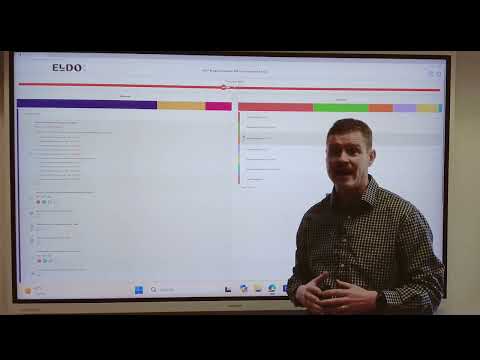
City presenter demonstrates Balancing Act budget-simulation tool for residents
Summary
A city presenter demonstrated 'Balancing act,' an interactive budget-simulation tool that lets residents adjust property tax mill levies and program spending, submit suggestions, and opt in for email updates. Results will be shared with the City Commission in aggregate and are advisory only.
A city presenter demonstrated the Balancing act budget-simulation tool and invited residents to test trade-offs between taxes and services and submit their own budget proposals for the City Commission’s consideration.
The tool lets users change revenue and spending choices and see the effect on a projected deficit. The presenter said residents can click revenue options such as property-tax mil adjustments and tweak expense categories like public safety, then submit suggestions and an optional email address to receive updates about the 2027 budget process. "Balancing act is a tool the city has subscribed to allowing the community to have an interactive demonstration of the city's budget," the presenter said.
The simulation displays revenue controls on the left and expense categories on the right. On the revenue side, users can change property taxes in increments the presenter described (0.5, 1 and 2 mils); the presenter used a worked example in which decreasing property taxes by 3 mils reduced the required budget cuts to a $373,000 deficit. On the expense side, users can expand categories such as public safety to add or reduce services; the presenter said the police department’s budget can be increased or reduced using the interface and that users may create their own formulas for reductions.
Help features in the tool—indicated by an eye icon—explain what each category covers and why some items are locked. The presenter said items can be locked for reasons such as contractual obligations or state law limits. The tool covers only mill-levy-supported funds, the presenter said: the general fund, library fund, debt service fund, airport fund and the industrial mill levy fund. Enterprise funds such as water, sewer, refuse and tourism are excluded because they are not supported by property taxes.
Users can type ideas into a 'your suggestion' field and submit their completed simulation; the presenter said results from all users will be shared in aggregate with the City Commission. "The budget simulation tool results will be shared with the City Commission in aggregate form. However, the guidance that is provided by the community is advisory only," the presenter said, adding that the City Commission retains responsibility for reviewing and approving the final budget.
The presenter encouraged residents to aim for a balanced ("green") budget in their submissions, provided information on using the tool, and thanked participants for taking part in an exercise intended to increase transparency and public understanding of city budgeting. Those who submit may provide an email address to receive budget-process updates.