Get Full Government Meeting Transcripts, Videos, & Alerts Forever!
Get email alerts on the Telecommunications Tower Variance topic
No spam. Unsubscribe anytime.
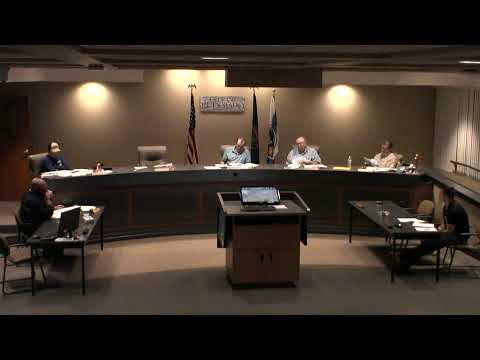
Planning commission denies setback variance for proposed 150-foot AT&T tower at 927 North Oil Hill Road
Summary
The El Dorado Planning Commission voted to deny a variance that would have reduced the 150-foot setback for a proposed 150-foot AT&T monopole at 927 North Oil Hill Road, finding the application did not meet statutory variance criteria. Commissioners raised safety, outreach and precedent concerns.
The El Dorado Planning Commission voted to deny a setback variance for a proposed 150-foot wireless communications monopole that AT&T planned to place at 927 North Oil Hill Road.
Staff introduced case 26-01-BZA and said the applicant, Network Real Estate on behalf of AT&T, requested relief from the 150-foot required tower setback because the parcel available for lease was not large enough to meet the regulation. Staff noted the variance criteria required by state statute and suggested potential conditions the commission could impose if it granted relief, such as an engineer’s report about the tower’s fall area.
Glenn Clockey, who identified himself as a representative of Network Real Estate, told commissioners he has worked the search ring for about two years and that the chosen parcel’s owner was willing to lease. He said the proposed monopole would “vastly improve the coverage for AT&T in the city of El Dorado, for 9-1-1 purposes, for your wireless, and for your data.” He offered to provide a letter from engineers about how monopoles are designed to collapse inward if that would help.
Commissioners pressed the applicant on outreach and safety. One commissioner asked whether nearby property owners had been contacted; the applicant said letters and calls had been made but that some owners did not respond. Commissioners also asked about liability coverage; the applicant said AT&T carries insurance and stated a figure of about $3,000,000 per tower.
After closing the public hearing (no members of the public spoke), a commissioner moved to deny the variance, finding the application did not meet the statutory criteria. The motion passed on a roll-call vote recorded by staff as five in favor of denial. The chair noted that the denial “would end it.”
The record shows the commission relied on the five statutory variance considerations (uniqueness, effect on adjacent property, hardship, public welfare, and spirit of the regulations) and concluded the submitted materials did not justify relief. The applicant may pursue other options provided by law; the commission’s denial was the final action recorded at the meeting.