Get Full Government Meeting Transcripts, Videos, & Alerts Forever!
Get email alerts on the Abraham Accords topic
No spam. Unsubscribe anytime.
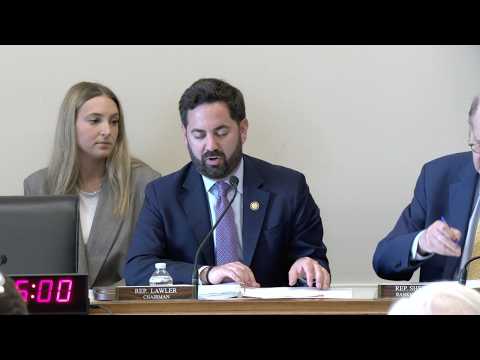
House Foreign Affairs chair opens hearing on future of the Abraham Accords
Summary
The chair of the House Committee on Foreign Affairs opened a hearing to examine how Congress can support deeper security, economic and technology cooperation under the Abraham Accords, calling the agreements a bipartisan foundation for regional stability and naming Israel, the UAE, Bahrain, Morocco and Kazakhstan as partners.
The chair of the House Committee on Foreign Affairs opened a hearing on the future of the Abraham Accords, saying the agreements have “fundamentally changed the trajectory of the Middle East” and urging lawmakers to consider how Congress can bolster implementation and expand the framework.
The chair framed the Accords as a bipartisan achievement that has opened “a new era of diplomatic engagement, economic integration, technological innovation, and security cooperation.” He noted signatory states by name — Israel, the United Arab Emirates, Bahrain, Morocco and Kazakhstan — and described the Accords as a foundation, not a finished product, for deeper regional cooperation.
“Nearly six years ago, the Abraham Accords fundamentally changed the trajectory of the Middle East,” the chair said, adding that the United States has an interest in deepening security cooperation, accelerating trade and investment, and expanding collaboration on artificial intelligence, cybersecurity, energy and infrastructure.
The chair tied the Accords to U.S. national security interests, warning about “Iran’s aggression and the threat posed by its terrorist proxies” and saying the region is stronger when partners coordinate. He also said the Accords have historically received bipartisan support in Congress and noted that his first bill to become law addressed Abraham Accords policy, referencing Congressman Ritchie Torres.
The hearing’s purpose, the chair said, is practical: to ask how Congress can support the next phase of implementation and whether there are opportunities to bring additional countries into the framework. He thanked the panel’s witnesses and said the committee looks forward to their testimony.
The committee did not take any votes during the opening remarks; the chair then moved to hear testimony from the witnesses on how the United States can build on the Accords.