Get Full Government Meeting Transcripts, Videos, & Alerts Forever!
Get email alerts on the Haiti Security topic
No spam. Unsubscribe anytime.
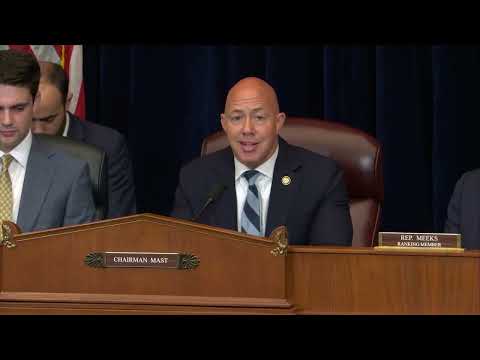
House Committee on Foreign Affairs chair says gangs control Port-au-Prince, presses witnesses for benchmarks and full costs of U.N. force
Summary
At an oversight hearing, the committee chair said gangs now control much of Port-au-Prince, criticized a prior UN-backed MSS mission as a failure, and demanded benchmarks, cost details and candid testimony on the newly authorized U.N. gang suppression force (GSF).
The chair of the House Committee on Foreign Affairs opened an oversight hearing on security in Haiti by saying that armed groups now "control" the national capital and that gangs "hold an estimated 90% of Port-au-Prince," presenting the situation as an urgent threat to Haitian civilians and U.S. interests.
The chair cited large-scale human impacts and brutality, saying the gangs "have displaced more than 1,400,000" people and listing murder, kidnapping, extortion and other violent acts. He warned that a fully collapsed Haiti "would not just stay in Haiti," linking insecurity to potential mass illegal migration that he said would harm American and allied interests.
He criticized the previous multinational security support (MSS) mission — a U.N.-authorized operation that brought personnel from countries such as Kenya and Chad — calling it a failure and quoting the State Department as having characterized the mission as "an ineffective boondoggle." The chair said that when Kenyan officers returned home this April, gangs controlled more territory than when the MSS began, adding, "That is the definition of failure."
The chair described the new U.N.-authorized gang suppression force (GSF) as a more kinetic mission with a direct-action mandate and noted that, "on paper," the U.S. assessed share is about $117,000,000 a year. He pressed administration witnesses on whether those benchmarks are real or merely aspirational, asking what would happen if the force missed them and requesting the mission's success criteria after noting a U.N. special representative was to provide a strategy by July 1.
He also outlined U.S. bilateral assistance rolled out alongside the assessed contribution — "up to $40,000,000 in bridge and sustainment funds, 68,000,000 in equipment, a police recruitment surge, support for Haiti's armed forces, and now counterterrorism funds" — and questioned whether parts of the mission (for example, meals ready to eat and bottled water) are effectively being paid for by the American taxpayer even though the department says such items belong to contributing countries.
The chair warned of timing constraints: the U.N. mandate for the GSF expires on Sept. 30 before the force reaches full strength, and scheduled August elections appear unlikely amid current insecurity. He also pointed to the reported effects of a private company, Vectus Global, run by Erik Prince, saying diplomats credit about 150 contractors with "altering the momentum and the geometry of this fight," and argued that a 5,500-person U.N. force should have no excuses if a much smaller contractor had noticeable impact.
The committee chair concluded by urging candor from witnesses: "Tell us what is working. Tell us what is not. Tell us what you need." He closed by warning that the committee would not allow a repeat of past failures: "That will not happen on this committee's watch."