Get Full Government Meeting Transcripts, Videos, & Alerts Forever!
Get email alerts on the Hrc Budget Staffing topic
No spam. Unsubscribe anytime.
Dayton Human Relations Council reports steady midyear budget, near-full staffing and new business support center
Summary
HRC Executive Director Ramon Collin told commissioners the council’s 2026 budget is a little over $1.1 million, staffing is nearly restored and a new business support center and expanded vendor outreach aim to help small, minority- and women-owned firms win city work.
Ramon Collin, executive director of the City of Dayton Human Relations Council, briefed the commission on the HRC’s midyear finances, staffing and small-business support efforts. He said the council’s 2026 budget is “a little over $1.1 million,” about half spent at midyear, with personnel as the largest share and roughly $100,000 budgeted for contracts and materials.
Collin said the HRC is close to being fully staffed after a three-year period of vacancies. He listed recent hires in compliance, outreach and office support and said a candidate for equal-opportunity specialist failed civil-service clearance; an offer letter has since been signed and the city expects that position to be filled within weeks. “We should be welcoming our equal opportunity specialist within the next couple of weeks,” Collin said.
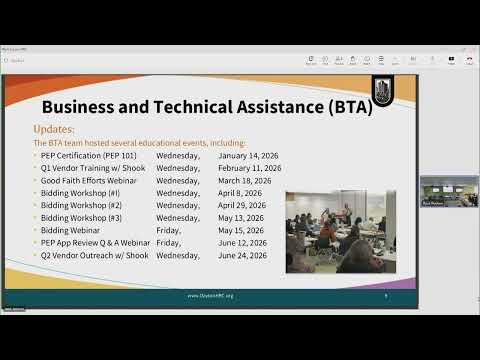
The presentation emphasized the office’s work with small and disadvantaged firms through the PEP certification program. Collin reported 110 PEP-certified firms as of July 13 (72 MBE, 46 WBE), 31 new certifications, 12 cross-certifications and 15 renewals. He said about 46 firms are “actively interested” in city work but acknowledged the challenge of converting interest into bids and contracts.
To improve outcomes, the HRC plans a new business support center that will provide computers, software (including QuickBooks) and one-on-one assistance so small contractors can prepare bids and manage back-office requirements. Collin described a shift from lecture-style outreach to hands-on workshops and staff-led technical assistance: “Instead of doing events that tell people how to do things, let’s start being hands on and more technical,” he said.
Commissioners pressed staff on the rate at which certified firms actually bid on city contracts. Collin said roughly 15–20% of certified firms currently bid; he offered to provide more detailed numbers on bidding and contract wins. Commissioners also asked staff to report back on the effectiveness of vendor-notification and recertification outreach; staff said renewals occur but progress is gradual because of the program’s due-diligence requirements.
The commission asked for continued briefings and a list of board members, and commissioners offered to help connect the HRC to community partners and to support school-based pilot programs. The HRC said it will follow up with a timeline for next steps and additional data on vendor participation before the next meeting.