Get Full Government Meeting Transcripts, Videos, & Alerts Forever!
Get email alerts on the Education Regional Agreements topic
No spam. Unsubscribe anytime.
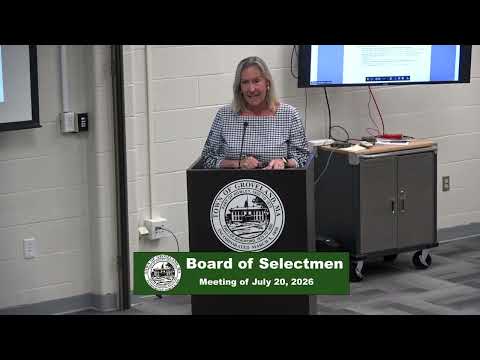
Select board hears update on Whittier regional agreement talks; 50/50 capital apportionment emerges as compromise
Summary
Groveland’s select board received an update on the Whittier Regional Agreement Amendment Committee. Committees are weighing a proposed hybrid 50/50 split between the current capital apportionment and a per‑pupil formula as a compromise to secure Haverhill’s participation and MSBA advancement; the town will continue monitoring outcomes and potential voter impact.
Jason (select board member and Whittier representative) and other committee members briefed the board on ongoing work to amend the Whittier Regional Agreement, a prerequisite the Massachusetts School Building Authority (MSBA) has set before advancing a new or substantially renovated Whittier campus.
Committee discussions have centered on how to apportion capital costs for a project that could be large (participants used a $200 million scenario as an illustrative example). Current capital apportionment methods would yield a much larger share for Haverhill than a pure per‑pupil approach. Multiple communities pressed for a per‑pupil formula while Haverhill sought terms that would keep its capital burden manageable. A working compromise described to the board was a 50/50 split: half of capital costs apportioned under the current formula and half apportioned by enrollment (with likely smoothing via a rolling average to avoid big year‑to‑year swings).
Committee members stressed the process remains fluid: any amendment must ultimately be approved by member communities and, after any school committee vote, would be subject to DESE and voter processes where applicable. The board discussed practical consequences for Groveland — including per‑household impacts, the risk of an override, and whether DESE would accept the amended language — and asked for scenario modeling showing likely per‑household annual assessments under different price points and apportionment formulas.
No vote was taken by the select board; the update was informational and the town will continue participating in the regional discussions and seek clearer cost and DESE‑approval signals before any local vote.