Get Full Government Meeting Transcripts, Videos, & Alerts Forever!
Get email alerts on the School Performance topic
No spam. Unsubscribe anytime.
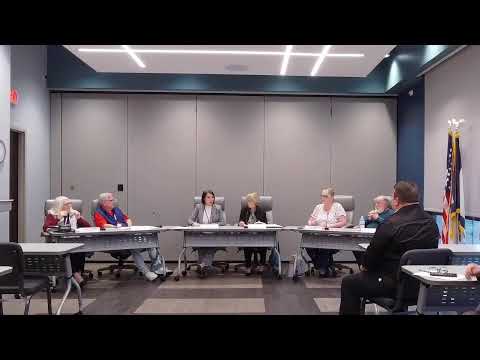
High school principals warn of credit-recovery limits, chronic absenteeism and failing grades at McDowell County board meeting
Summary
Principals Tim Kennedy (Mount View) and Frasier McGuire (Riverview) told the McDowell County Board that attendance and student apathy are driving failures; they described attendance gains at Mount View and cited a state change that limits credit-recovery time.
Frasier McGuire, principal of Riverview High School, told the McDowell County Board that credit-recovery and failing-grade patterns are a major driver of low school success measures and that a state change to the credit-recovery platform has reduced counselorsability to extend students' completion windows. "If you're not in school, the best teacher can't teach you," McGuire said, explaining that many students who failed classes also miss school frequently and, in interviews, showed little concern about failing.
McGuire gave concrete numbers: 84 students were enrolled in career-technical center (CTC) programs (41 morning, 43 afternoon), and 23 students were taking dual-credit classes. He cited frame counts of failing grades, including 46 ninth-graders with at least one core failure and subject-specific tallies such as 32 Fs in ninth-grade math, eight Fs in ninth-grade English, 21 in ninth-grade science and 26 in social studies. He said late-semester students who did not finish credit-recovery work now face an automatic removal from the platform and may have to retake courses or attend summer school.
Tim Kennedy, principal of Mount View High School, said his building has cut chronic absenteeism sharply and improved daily attendance after a package of operational changes. "Last year, we were 52.27% chronic throughout our building. As of today, we are 39.81%," Kennedy said, and added that daily attendance rose from about 84.5% to 88.39%. Kennedy described specific interventions: moving attendance entry into a single system to reduce errors, a phone-call room with parent contact information to increase outreach, sending truancy letters (about 130 first-semester letters) and requiring midterm sign-offs by students and parents.
Kennedy also provided graduation and postsecondary context: he reported a snapshot graduation-rate figure of 68 and said 37 seniors and 58 juniors attend CTC programs; 15 students take dual-credit classes. He described Options Pathway and Mountaineer Challenge Academy as alternatives for some seniors and said the school is tracking and meeting with students identified as at risk.
Both principals emphasized that attendance is the principal driver of many academic issues and described school-level steps (home visits, counseling coordination, in-person credit-recovery supports) to address it. The board thanked both principals for the reports and said district staff will continue to monitor progress and share updates at future meetings.
The presentations were part of regular reports to the board; no formal board action was taken on these presentations during the session.