Get Full Government Meeting Transcripts, Videos, & Alerts Forever!
Get email alerts on the Historic Building Reuse topic
No spam. Unsubscribe anytime.
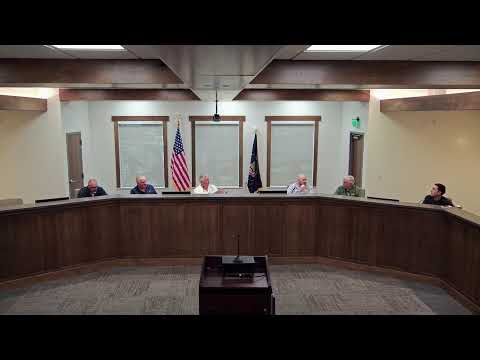
Santaquin council weighs reuse options for historic library; staff to cost top choices
Summary
At a work session councilors discussed converting the old library into a co‑working incubator, courthouse, museum space, event/restaurant tenant or a Lucy Parsons‑led theater; staff was asked to compile a short list of feasible options with cost estimates and report back in mid‑September.
Santaquin’s city council spent the work session exploring multiple reuse options for the city’s historic (old) library and asked staff to develop a short list of feasible choices with cost estimates.
The presiding officer opened the discussion saying the city does not want “an empty building that sits across the street” and asked the council to consider possibilities ranging from private leases to municipal uses. A council member proposed converting the building into a business center or co‑working incubator that could provide meeting space, rentable desks and modest private rooms for professionals who currently commute, which she said could generate revenue and require only modest fit‑outs such as temporary glass partitions.
Lucille “Lucy” Parsons, who identified herself as an educator and theater director, presented a detailed theater concept developed pro bono by an architect. Parsons said the architect produced designs representing about $80,000 in professional hours donated to the project and that the theatre concept would rely on endowments and private gifts rather than direct city funding. “We would do it through endowments, personal gifting,” Parsons said, adding the project would emphasize youth programming and community performances.
Council members and staff raised practical constraints. The chair and others noted the building’s high ceilings and sound‑control needs would make private offices or confidential workspaces more expensive, and staff cautioned that any court or police use would trigger security, accessibility and code requirements (judge protection, witness rooms, ADA access) that likely require significant renovation. A resident reported that the building’s original pump organ was donated on the condition it remain with the property.
Jennifer Wagner, the library director, described how the new library will have study rooms and conference space and said the city already fields requests from lawyers and others to use rooms for private interviews; she suggested the city could offer paid, scheduled access to similar spaces in the new library while the old building’s long‑term use is determined.
Staff said a charter school has expressed interest and recommended the council decide whether the city intends to retain the building for municipal purposes or pursue private leases. The council generally agreed on holding ownership and asked staff to produce feasibility estimates and a prioritized short list of two to three options for review. The body scheduled a follow‑up discussion in roughly a month and targeted a mid‑September meeting for next steps.
The council did not take a final vote on a disposition; it directed staff to gather cost estimates, confirm code and seismic status, and return with options and potential funding approaches (including donor and endowment models) at the next discussion.