Get Full Government Meeting Transcripts, Videos, & Alerts Forever!
Get email alerts on the Blight Tax Ordinance topic
No spam. Unsubscribe anytime.
DeKalb County unveils blight tax ordinance and launches task force to target chronically neglected commercial properties
Summary
DeKalb County leaders announced a blight tax ordinance effective May 10 and a new blight task force to identify and push chronically neglected commercial properties toward remediation, saying the measure includes due-process protections and a dedicated fund for façade improvements funded by elevated millage on designated parcels.
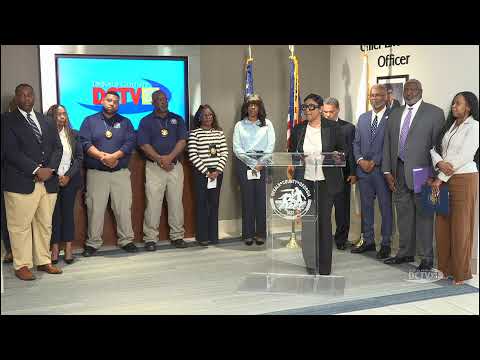
DeKalb County CEO Lorraine Cochran Johnson announced a new blight tax ordinance and a dedicated blight tax task force at a county press briefing, saying the measure is meant to compel commercial property owners to remedy dangerous, long-neglected properties that depress neighborhood safety and property values.
"It's not about raising taxes," Johnson said, and described the ordinance as a tool "to hold chronically neglected property owners accountable while protecting the residents who live in these communities." She added the county cannot unilaterally declare a property blighted and stressed that designation must come through ‘‘due process of law’’ in court.
Tonsa Clark, director of Code Compliance, outlined the county's implementation steps and said Code Compliance has prepared standard operating procedures, trained officers on evidence collection and assembled an initial inventory of candidate cases to send to the law department for review. "We document the property conditions when we go out to inspect the properties," Clark said, describing a team that includes a deputy director, a supervisor for day-to-day operations and designated officers who will gather photos and documentation to build court-ready files.
Interim County Attorney Terry Phillips described the legal sequence: once Code Compliance refers a documented file, the law department may file a complaint, serve interested parties and request a court hearing. If a judge issues a written order designating a property as blighted, the order would be sent to the tax commissioner and the ordinance allows applying a millage rate up to 10 times the standard rate to that parcel. Phillips said owners who remediate can seek a reduction of the elevated rate, which he described as lowering to one-half of the normal rate for a two-year period if the required corrections are made.
Officials said the ordinance applies only to commercial properties and does not target properties solely for appearance. Johnson said the county's stated goal is "compliance and revitalization," not punishment, and that revenues from any elevated millage would be set aside in a designated fund to provide cooperative grants to existing businesses for façade improvements.
At the briefing Johnson said the county has sent roughly 10 case files to the law department for review and that about 50 additional properties are undergoing title searches to determine ownership. When a reporter contrasted DeKalb's schedule with other jurisdictions that passed similar policies but moved slowly to apply them, Phillips responded that the files under review "will lead to complaints" and said the county intends to enforce the legislation adopted by its governing authority while also pursuing outreach and voluntary compliance.
Reporters asked whether residential properties could be subject to the blight tax; county officials reiterated the ordinance targets commercial parcels and that residential issues continue to be addressed through existing citation processes and rehabilitation programs for seniors and others in need.
When asked to name the 10 properties under review, Phillips said it would be improper to identify specific parcels until a complaint is filed and becomes a public court record; he added that filings would likely proceed in magistrate court though venue might vary depending on the attorney assigned.
The county said copies of the ordinance and a process flowchart will be distributed by the Office of Communications after the briefing.
(Reporting from the DeKalb County press briefing.)