Get Full Government Meeting Transcripts, Videos, & Alerts Forever!
Get email alerts on the Zoning Solar topic
No spam. Unsubscribe anytime.
Hopkinton residents urge council to reject developer-crafted floating zone tied to Die Hill solar proposal
Summary
Dozens of residents at the July 20 Hopkinton Town Council meeting urged the council to resist a developer-drafted floating-zone ordinance they say is designed to allow a large-scale solar project on Die Hill Road, citing prime farmland, groundwater and forest impacts and asking that zoning follow the ongoing comprehensive-plan update.
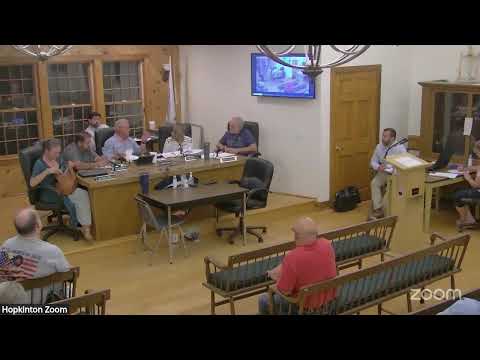
Dozens of residents used the Town Councils public-comment period on July 20 to press elected officials to block a floating-zone change they say would be written to accommodate a utility-scale solar proposal on Die Hill Road.
"Enough is enough," said Joe Morrow, who identified himself from Old Depot Road and reviewed project records and blueprints he said label the site "Die Hill Solar" and note the parcel as prime farmland, within a groundwater protection area and in a FEMA flood zone. "Weve done more than our fair share with solar," he added.
Steve Moffitt, who read a previously submitted email into the record, warned that the floating-zone language being circulated sets acreage and frontage thresholds (350 acres, 500 feet) tailored to a single parcel and said adopting it before an updated comprehensive plan would be "irresponsible." He urged planning-led public engagement first: "Planning should come first. Zoning should follow."
Local attorney and planning-board volunteer Al D'Orio told the council that a floating zone is a legitimate tool but said councilors are under no legal obligation to approve it. "When this comes to you, we should be clear that youre under no obligation to approve this," he said, arguing the town should decide whether the application "belongs here." Sylvia Thompson and other speakers also recalled earlier denials of a Brushy Brook solar plan and expressed concern that developers use housing or other proposals as leverage.
Council members and staff clarified process steps: the planning department will review the developers application for completeness; the planning board will issue advisory opinions; and the council would consider any floating-zone ordinance (a change to the zoning ordinance) if and when formally proposed. Residents pointed to a land sale record cited at the meeting (purchase date 01/14/2026, purchase price noted in public comments as $4,000,000) and to plans that show a long interconnection route to Ashaway, which speakers said would require repeated road excavations.
The meeting did not include a council vote on any zoning change; council leaders directed that the planning board process and comprehensive-plan update should guide decisions and encouraged residents to participate in that update. Several speakers asked the council to stand as a gatekeeper if planning staff and the planning board do not recommend rejection.
Next steps: the planning department will continue to process the application and the planning board will consider advisory findings; any floating-zone ordinance would require a future council action and public hearings. Residents asked the council to withhold ordinance action until the towns comprehensive-plan update is complete.