Get Full Government Meeting Transcripts, Videos, & Alerts Forever!
Get email alerts on the School Reconfiguration topic
No spam. Unsubscribe anytime.
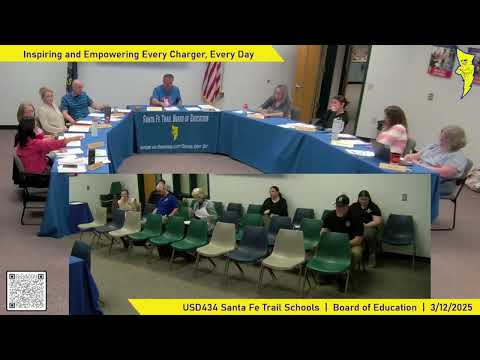
School board debates one‑campus consolidation, requests detailed cost and tax estimates and schedules special meeting
Summary
Board members discussed long‑term consolidation options, tradeoffs in operations and facilities, and asked staff to produce bond and tax scenarios from Piper Sandler; the board approved a motion to hold a special meeting April 3 to review financial estimates.
Staff member (Speaker 2) opened a strategic discussion of district facilities by asking the board to set a long‑term vision, then directed staff to provide tax and bond implications so members could evaluate feasibility. "I just wanted to provide you guys with some time," Speaker 2 said, urging the board to consider 10‑, 15‑ and 20‑year scenarios and to get financial modeling from Piper Sandler.
Board members said a single‑campus model is appealing for program continuity and reduced student transitions but cautioned it would be expensive and must be phased. "Long term it would be amazing to have one on campus," Committee member (Speaker 4) said, while others said Mission Valley’s past consolidation showed potential benefits but different timing and funding realities.
The board focused on financial tradeoffs: how much could operations save if one building closed, whether proceeds from selling or leasing a building could be redirected into construction, and what bond sizes would mean for property owners. Staff described a range of scenarios and asked the board to commission tax‑impact estimates. "There's some amount of dollars that we could run a bond with no tax increase," Speaker 2 said, while also noting other bond sizes could raise mills significantly depending on assessed‑valuation growth.
Members pressed for concrete numbers tied to specific options. Committee member (Speaker 7) asked for operating costs and student counts for each building; Speaker 2 proposed asking Piper Sandler to provide illustrative figures for multiple bond sizes (examples discussed: $5 million, $10 million, $20 million) so the public could see what each option would cost different homeowners.
The board also identified nonfinancial feasibility questions: whether the water and sewage systems could support a larger consolidated campus, whether planned gym and band room layouts would meet program needs (one member said the gym was short by about four feet for certain events), and how grade‑span shifts (6–8 vs. 7–8) would affect athletics and class sizes.
Several members urged clearer deliverables from the outside consultant HTK, saying the previous study assessed utilization but lacked detail on square footage, easements, parking and lagoon capacity. The group agreed staff should compile a detailed list of technical and spatial questions to send to HTK before any return presentation.
The board discussed potential repurposing of closed facilities, including sale or lease to community partners; Staff member (Speaker 2) cited the "Santa Fe Trail Building" as an example of a facility that a partner might use under a lease or purchase arrangement, while warning that retaining a building on district books would keep insurance and capital costs with the district.
Next steps: staff will assemble operational cost estimates for each building, gather market bond scenarios from Piper Sandler, and produce a prioritized list of questions for HTK and other consultants. Committee member (Speaker 7) moved to schedule a special meeting to review those figures; Committee member (Speaker 1) seconded. The motion to hold a special meeting on April 3 at 5:00 p.m. at the DAC was approved with "All in favor." The board directed staff to prepare the requested financial and facility detail ahead of that meeting.
The board did not make any final decisions about closures, construction or bond placement at this session; members characterized the vote as a scheduling motion to gather more information and to allow public presentation of consultant findings and tax scenarios.