Get Full Government Meeting Transcripts, Videos, & Alerts Forever!
Get email alerts on the Public Comment And Meeting Tech topic
No spam. Unsubscribe anytime.
Supervisors weigh limits on public comment, town halls and online controls
Summary
At a July 22 work session, Cochise County supervisors debated draft rules for call-to-the-public procedures, town-hall frequency, speaker identification, time limits and Microsoft Teams controls; no final rule was adopted and staff will return with redlines.
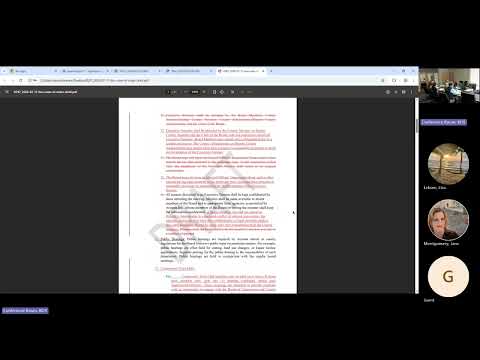
Cochise County supervisors on July 22 debated several proposed changes to rules governing public participation, including whether speakers must identify themselves, how many community town halls to hold, time limits for public comment and how the board handles remote participants on Microsoft Teams.
The board reviewed draft language that currently reads "up to three" town halls annually outside the county seat and discussed altering that phrasing so town halls would be a guaranteed regular outreach option. The chair proposed one meeting per district outside Bisbee, allowing each supervisor to host a local meeting and add district-specific agenda items; several members said they preferred at least three per year rather than an optional maximum.
On call-to-the-public rules, supervisors discussed the statutory distinction between a public hearing (an agenda item requiring germane comments) and a general call to the public. Members emphasized that call to the public is optional under state law and that the chair may set reasonable time limits. The draft defines a reasonable limit as three minutes per speaker but gives the chair authority to reduce that time during events with unusually large participation.
The board also debated whether to require speakers to state their name and locality. Clerks said a prior "noted" option on the speaker form complicated record-keeping; a staff representative noted state law does not require a speaker to give a name, though local rules may "strongly encourage" identification. "State law does not require speakers to state their name, but we can adopt rules to request it," the clerk said on the record. Supervisor Kathleen Gomez urged transparency in public testimony: "If you're gonna voice your opinion, you should... say who you are."
Members flagged privacy and legal concerns, noting the First Amendment and potential doxxing when people appear on video; others said encouraging identification improves record accuracy and staff follow-up. The board also reviewed options for hybrid meetings after several instances of remote participants accidentally unmuting. Staff said adding remote speakers as presenters would give the board more control over microphones but would require more advance setup for each meeting. Alternatives discussed included continuing hybrid participation with stricter presenter procedures, limiting online testimony, or returning to in-person-only public testimony in some cases.
No final policy was adopted. Staff were asked to prepare redlined revisions, including clarified language on speaker identification that "strongly encourages" stating name and locality, clearer town-hall frequency language, and options for managing remote speakers. The chair said the board will revisit the draft at an upcoming work session and noted the next regular meeting is July 28.
Context and next steps: The debate reflects tension between promoting public access and ensuring orderly, verifiable records. Staff will return with recommended language and operational alternatives for the board to consider at a future meeting.