Get Full Government Meeting Transcripts, Videos, & Alerts Forever!
Get email alerts on the 1pct Sales Tax Referendum topic
No spam. Unsubscribe anytime.
Mauldin council approves first reading of 1% sales‑tax referendum; staff projects roughly $19.6M for capital after tax relief
Summary
On first reading July 26, the Mauldin City Council approved placing a 1% municipal sales tax on the November ballot under South Carolina’s Municipal Tax Relief Act (vote 4–1). Staff projected roughly $24.5 million gross over eight years, with at least 20% required for owner‑occupied tax relief and about $19.6 million remaining for capital improvements in the staff proposal.
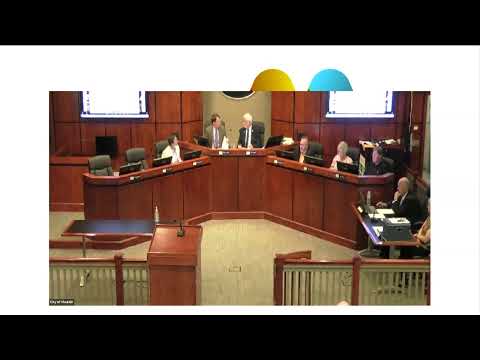
The Mauldin City Council on July 26 approved on first reading an ordinance to place a 1% municipal sales tax referendum on the November ballot under the state Municipal Tax Relief Act. The measure passed first reading 4–1 and, if adopted on second reading, would go before voters this November.
City staff summarized statutory requirements and a draft ordinance prepared with bond counsel. Staff said the tax would generate revenue over an eight‑year projection, and after administrative fees and the statutorily required minimum 20% set aside for owner‑occupied property tax relief, staff estimated about $19.6 million would be available for capital projects. “The law specifically says these are for core governmental services… transportation infrastructure, capital projects related to public safety,” the city administrator said while outlining staff’s recommended allocations.
In the staff’s presented allocation, about $15.6 million would be directed to the city resurfacing program and about $4 million toward Fire Station 5, with a caveat that council could reassign unallocated funds if it preferred other projects. Staff and bond counsel also recommended limiting bond issuance to roughly 75% of projected revenue if council included bond language in the ordinance, to avoid overbonding against a new tax without a revenue history.
Council debate focused on three topics: how specific the ballot language and referendum materials must be (counsel advised statutory structure limits how detailed a project list can be on the ballot), whether to authorize bonds or take a pay‑as‑you‑go approach, and whether the minimum 20% property‑tax relief is adequate. Councilmember Pralin said he would vote against the measure because he believes returning only 20% is insufficient, calling it “a sales tax” that will primarily raise revenue rather than fully substitute for property tax. Others said voters should decide: “If the citizens vote no, then you don’t get the 1¢ sales tax,” the mayor said, describing the ordinance as a tool placed before voters.
The motion to approve first reading was made by Councilmember Reynolds and seconded by Councilmember Matney. The motion carried 4–1.
If council adopts the ordinance on second reading, voters will see the referendum in November and would need a majority of votes cast for the measure to carry, per counsel’s summary of the statute.