Get Full Government Meeting Transcripts, Videos, & Alerts Forever!
Get email alerts on the Americans With Disabilities Act topic
No spam. Unsubscribe anytime.
Rehabilitation counselor Casey Tatum says ADA helps people with disabilities find work and improves mental health
Summary
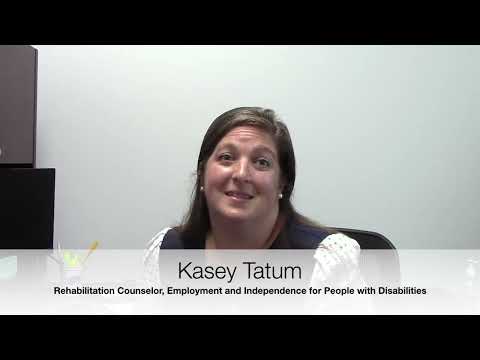
Casey Tatum, a rehabilitation counselor with Employment and Independence for People with Disabilities, told the Mental Health, Developmental Disabilities and Substance Abuse Services meeting that the Americans with Disabilities Act enables competitive employment and community integration through low-cost accommodations, which she said also supports mental health.
Casey Tatum, a rehabilitation counselor with Employment and Independence for People with Disabilities, told the Mental Health, Developmental Disabilities and Substance Abuse Services meeting that the Americans with Disabilities Act has made a clear difference for people with disabilities seeking work and community inclusion.
"My name is Casey Tatum, and I am a rehabilitation counselor with Employment and Independence for People with Disabilities," Tatum said. She said she works in "a rural satellite office in the Central region" and praised the ADA for enabling simple, inexpensive accommodations that let people take part in competitive employment.
Tatum gave everyday examples of accommodations and their effects. "A lot of the accommodations are very very cheap, very inexpensive, maybe a different headset or something like that to answer the phone," she said, adding that those changes help not only people with disabilities but also coworkers. She said the accommodations and workplace integration have a positive effect on clients' mental health: "they feel like a part and that helps a lot with their mental health."
Tatum described the ADA as "an amazing attribute to our laws here in The US," and said that the law's requirements allow people with disabilities to be integrated into their communities rather than separated, which she has observed in her work.
The meeting record contains no motion, vote, or formal action tied to Tatum's remarks; her statements appear as testimony offered to the body. No other speakers or staff responses to these specific claims are recorded in the transcript.