Get Full Government Meeting Transcripts, Videos, & Alerts Forever!
Get email alerts on the Humanitarian Response topic
No spam. Unsubscribe anytime.
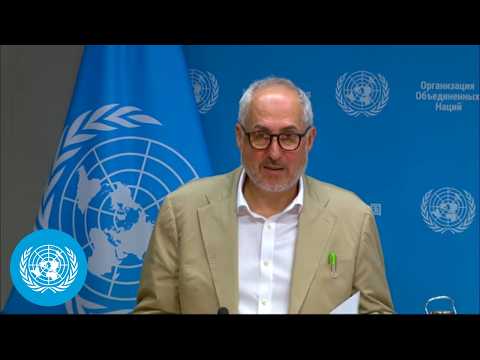
UN spokesperson warns resource-driven conflict risks, details humanitarian strains in Sudan, Gaza, DRC and Ukraine
Summary
At a United Nations briefing, the UN spokesperson outlined how control of critical minerals is altering conflict dynamics and provided updates on humanitarian crises: deadly strikes in Sudan, Ebola and insecurity in eastern DRC, displacement in the Central African Republic, severe shelter and fuel shortages in Gaza, and a Ukraine winter appeal.
At a United Nations briefing, the UN spokesperson, Steph, said the control and exploitation of natural resources are reshaping conflicts globally and outlined urgent priorities for addressing the problem while also summarizing acute humanitarian needs in Sudan, the Democratic Republic of the Congo, the Central African Republic, Gaza and Ukraine.
Steph said the Secretary‑General told the Security Council that critical minerals such as lithium, cobalt, nickel and rare earth elements are “gaining in strategic importance” and that the UN recommends four priorities: ensuring justice for resource‑rich countries and communities; curbing illicit flows and strengthening transparency across mineral supply chains; peacefully settling disputes over natural resources; and taking climate analysis into account when addressing resource‑related tensions.
The spokesperson described immediate humanitarian crises in several regions. On Sudan, Steph said deadly drone strikes and other hostilities continue to harm civilians, particularly in Darfur and Kordofan, and cited a reported market attack in Rahad that killed at least six people, including two children. “All parties need to uphold their obligations under international humanitarian law,” Steph said, adding that parties must protect civilians and facilitate safe, unhindered humanitarian access.
In the Democratic Republic of the Congo, the briefing said insecurity in eastern North Kivu is restricting humanitarian operations and the Ebola response. According to the briefing, local civil society reported at least 30 people killed in a series of attacks in Beni territory between July 13 and July 19, and national authorities had reported 2,473 confirmed Ebola cases across affected provinces. Steph noted that UN peacekeepers are helping to deter attacks on health facilities and civilians in Ituri.
Reporting on the Central African Republic, the spokesperson said the UN mission in the country has reinforced peacekeeper presence around Amdafok in Vakaga prefecture and that nearly 18,000 displaced people have sought refuge near the UN base since the June 30 attacks; the mission has helped deliver more than four metric tons of assistance and facilitated rotations delivering 1,200 kilograms of supplies.
Steph also detailed dire humanitarian conditions in the Gaza Strip, saying OCHA teams found displacement sites where fires damaged family tents and essential items. The spokesperson stressed that cooking gas and hardened shelter materials need regular entry into Gaza, noting that private‑sector truck deliveries of cooking gas have been extremely limited and that stocks of tents and household supplies are “severely depleted” (the briefing reported fewer than 1,000 tents available and supplies to support about 7,000 households). “Cooking gas must be allowed to enter the Gaza Strip regularly,” Steph said.
On Ukraine, the briefing introduced a 2026–27 winter response plan calling for $358 million to support about 2.1 million people with heating, shelter repair, health care, protection and cash assistance from October through March; the Ukraine Humanitarian Fund has already allocated $50 million to the plan, Steph said. The spokesperson also reported recent attacks in the Donetsk region that damaged the premises of the Ukrainian Red Crescent Society in Dzhushkivka and a hospital in Kramatorsk.
The briefing touched on wider political and budgetary context. Steph said the Secretary‑General is closely following developments in Nicaragua and expressed concern about a narrowing civic and political space there, citing a Human Rights Office statement by Volker Türk. Reporters pressed the UN on whether the ongoing conflict in the Gulf is making the world less safe; Steph answered that it is, citing risks of escalation and economic impacts such as higher energy prices and disrupted trade, and emphasized that global military spending should be reoriented toward long‑term development and humanitarian needs. “Some of that money should be reoriented,” Steph said.
Steph also welcomed a recent General Assembly decision that will ease the UN’s liquidity pressures, saying it will give the organization “more breathing room” this year and next and help avoid the recurring budgetary shortfall cycle. The briefing noted that Costa Rica had become the 121st member state to pay its assessed contribution in full, handing over $2,004,323 (reported in the briefing as $2,000,000 and $4,323).
The spokesperson said the press office will provide comparative charts on member‑state dues and that further briefings and guest appearances are scheduled, including a session with Carla Quintana of the Independent Institution on Missing Persons in Syria.
The briefing concluded with the UN urging member states to respect territorial integrity, protect civilians and support humanitarian access while the organization seeks additional funding to meet urgent needs worldwide.