Get Full Government Meeting Transcripts, Videos, & Alerts Forever!
Get email alerts on the Economic Development topic
No spam. Unsubscribe anytime.
Aquaculture pitched as jobs and lagoon-restoration opportunity for Oak Hill
Summary
Dr. Nicole Perchoff told the City Commission that aquaculture could create local jobs, diversify the seafood economy and provide water-quality benefits, and outlined steps the city could take to align permitting and partner with state and federal agencies to grow shellfish and baitfish operations.
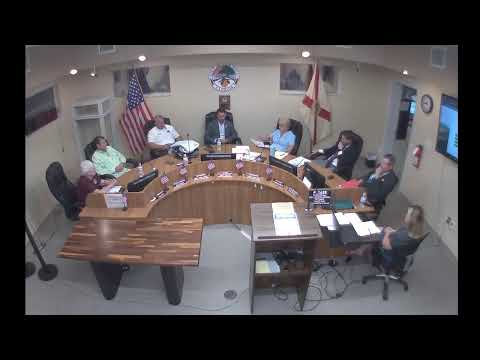
Dr. Nicole Perchoff, owner of Live Advantage Bait, told the Oak Hill City Commission that aquaculture could become “a pillar of sustainable development” for the town and Volusia County by creating jobs, strengthening local seafood markets and improving water quality.
Perchoff said Florida already has roughly $400 million in annual aquaculture sales and about 1,000 certified farms, and she emphasized that Oak Hill has natural advantages — access to the Indian River Lagoon, existing state-approved shellfish lease sites in the county and a local fishing heritage. “By supporting aquaculture, Oak Hill can potentially attract new small businesses, create meaningful employment and strengthen the environment and the local seafood economy all at the same time,” she said.
Her presentation outlined three practical steps city leaders could take: (1) streamline local permitting so county and city approvals align with state certification; (2) pursue partnerships with FDACS, NOAA, USDA, and local research institutions such as the UF Whitney Lab and Harbor Branch to build workforce and research capacity; and (3) incorporate aquaculture into disaster-resilience planning so farms and shorelines are better protected during storms. She also suggested local branding and seafood festivals to help market an "Oak Hill-grown" identity.
Perchoff addressed environmental questions, saying shellfish farms can filter water and sequester carbon in shells while providing habitat benefits. She noted technical constraints for some operations — including the need for water quality to meet health thresholds before certain offshore leases can be used — and described permitting timeframes that can range from months to more than a year depending on local processes.
Commissioners and residents asked about workforce training and college programs; Perchoff said she works with the Whitney Lab and Harbor Branch and is exploring partnerships with local schools for hands-on aquaculture education. She closed by offering to host field visits to her Fort Pierce hatchery and to provide a handout summarizing opportunities and next steps.
The commission did not vote on any formal action during the presentation; staff were asked to consider how aquaculture might fit into local economic-development and resilience planning and to follow up on potential partnerships and permitting clarifications.