Get Full Government Meeting Transcripts, Videos, & Alerts Forever!
Get email alerts on the Budget Policy topic
No spam. Unsubscribe anytime.
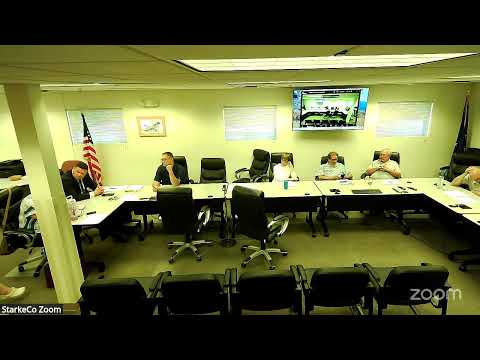
Commissioners set budget calendar and debate cuts, raises and local income tax options
Summary
Starke County commissioners adopted a budget schedule (workshop July 28; hearing Aug. 17; adoption Sept. 14) and discussed a predicted ~10% state funding cut, possible caps on employee raises, departmental cuts, and whether to shift ceded funds into a local income tax (LIT) to protect services.
The Starke County Board of Commissioners set its budget calendar and spent extended time debating how to respond to an anticipated roughly 10% cut in state funding.
Commissioners voted to hold a budget workshop on July 28, a public hearing on Aug. 17, and adopt the budget on Sept. 14. During discussion, several commissioners urged departments to identify cuts and look for ways to keep a modest employee raise (3% typical) while trimming other expenditures. One commissioner proposed a three-way split of shortfalls among departmental cuts, solar funds, and ceded funds; others urged revisiting retirement actuary assumptions and seeking efficiencies in departmental budgets.
Members also discussed a possible local income tax (LIT) as a mechanism to shift revenue (not increase overall taxpayer burden) by lowering ceded property-tax distributions and recompiling receipts as income-tax allocations for county priorities—an approach some commissioners said they could support only if it produced a strict offset so taxpayers would not see a net increase. No formal decision on a LIT was made; commissioners asked staff to prepare options and encouraged departments to pursue feasible cuts and document potential impacts ahead of the workshop.
The board emphasized protecting high-priority services for vulnerable residents while balancing fiscal constraints and agreed to follow up with more detailed options in the budget workshop.